
Rising Financial Stress affects Bronx College Students' Mental Health
As mental health challenges continue to rise in the Bronx, college students across the borough say the pressure of working full-time, supporting their families, and keeping up with classes is pushing many to seek counseling or step away from school entirely.
Photo from Lehman Website
By Jennifer Estrella
As mental health challenges continue to rise in the Bronx, college students across the borough say the pressure of working full-time, supporting their families, and keeping up with classes is pushing many to seek counseling or step away from school entirely.Karen Salazar, a 29-year-old Bronx college student and mother of two, said she paused her studies before her final semester after developing anxiety.“I was working full time, taking classes, and taking care of my daughters,” Salazar said. “I felt like I was constantly behind. I couldn’t sleep. It just built up.”
For Salazar, rising rent, grocery bills, and transportation costs made it harder to focus on school. “You want to finish,” she said. “But when you’re stressed about money all the time, it affects everything.”
Jessenia Fajardo, a student at Lehman College, said many students
are constantly worrying about basic needs before they can even think about their coursework.
“The cumulative impact of unmet essential needs leaves your mind thinking more about ‘Where am I going to get the money to pay my light bill?’ instead of thinking about reading Shakespeare,” Fajardo said. “Your brain stays stuck in survival mode.”
That constant pressure often affects academic performance, she added. “That kind of overthinking leads to anxiety, depression, and procrastinating on schoolwork.”
Jaylene Rodriguez, a New York Police Department officer who works in the Bronx and a former Lehman College student, said financial strain and emotional distress are often connected in the
communities she serves.
“A lot of people are overwhelmed,” Rodriguez said. “When someone is juggling bills, childcare, and school, stress builds up fast. It doesn’t just disappear.”
In the study, Association Between Food Insecurity and Mental Health
Among College Students in the Bronx, New York (NY), by Brown et al., the researchers identified a strong link between financial insecurity and mental health struggles among students.
Marta Gil, a psychologist with 15 years of experience working with college students in the Dominican Republic who now resides in the Bronx, said those findings mirror what she has seen professionally and personally. Her daughter currently attends college in the borough.
“Students today are not just students,” Gil said. “Many are providers, caregivers, and full-time workers. When basic needs are unstable, anxiety becomes almost inevitable.”
“They keep pushing through exhaustion,” she emphasized. “But long-term stress eventually impacts performance, health, or both.”
Although there are resources aimed at helping students, such as Lehman’s Counseling Center, many students may not know how to access them or may not have the time.
“I wouldn’t be able to name them specifically off the top of my head, but I know the school does have resources,” Fajardo said. “The real
question is whether students know about them, feel comfortable accessing them, or even have the time to go.”
“Schedule flexibility, online classes, weekend options, weeknight classes, and those things matter,” she said. “And honestly, more grants and scholarships would make a real difference.”
Photo from Lehman Website
Lehman College’s Food Bank Improves Students Quality of Life
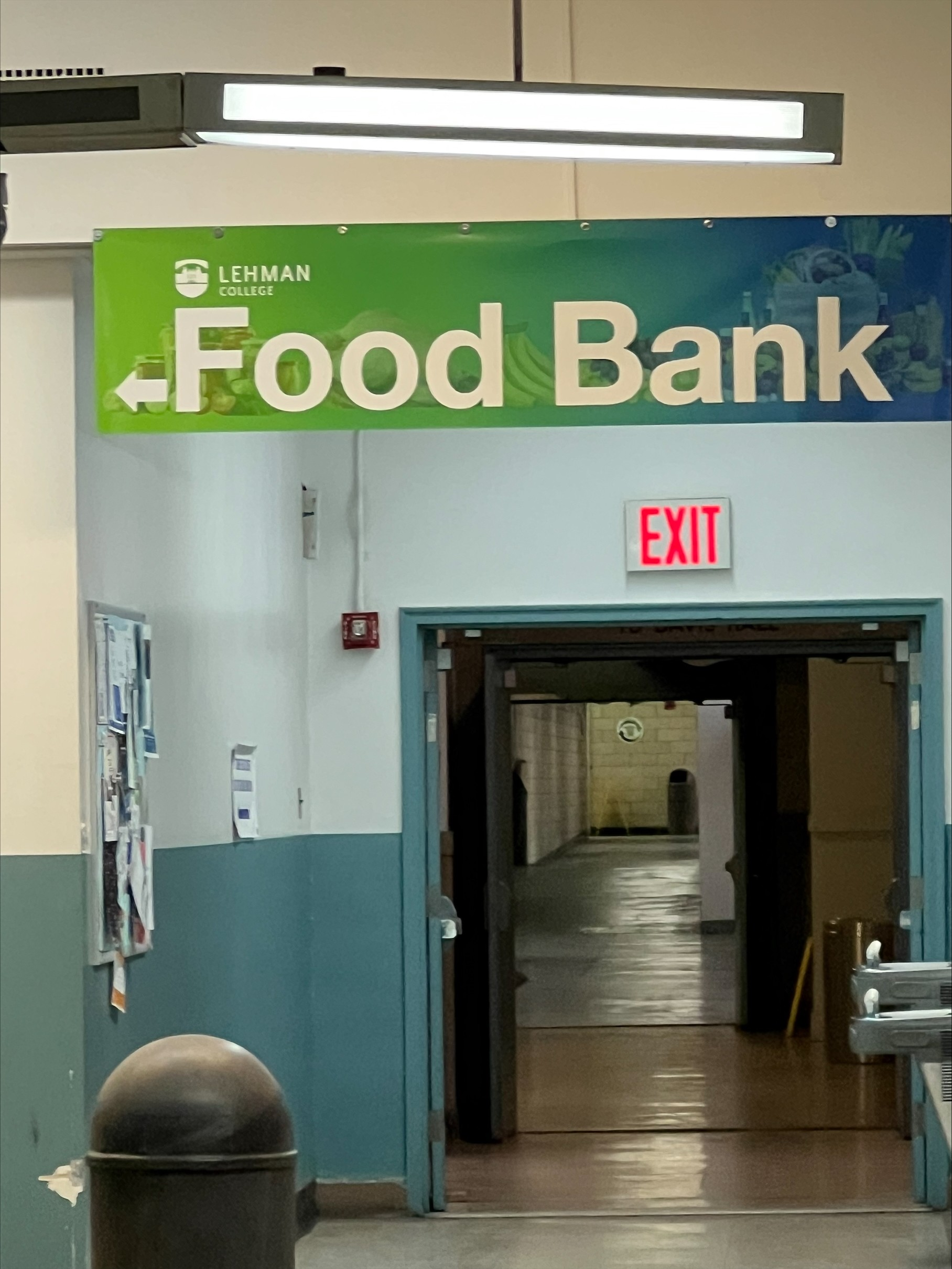
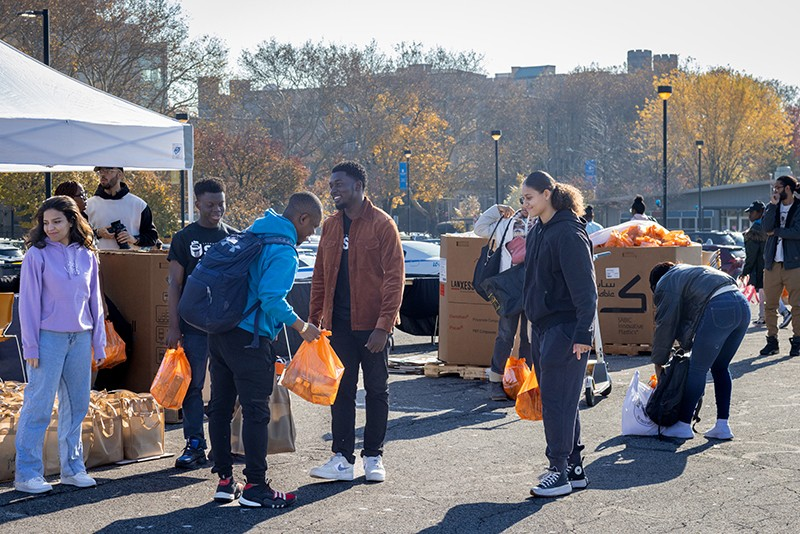
Herbert H. Lehman College’s Food Bank is often open on Wednesdays and Thursdays in Room B015A in the Old Gym basement. The bank provides students with access to fresh produce, grocery bags, and grab-and-go items to fuel students. During spring 2026, the food bank experienced an increase in numbers due to many current issues increasing food insecurity.
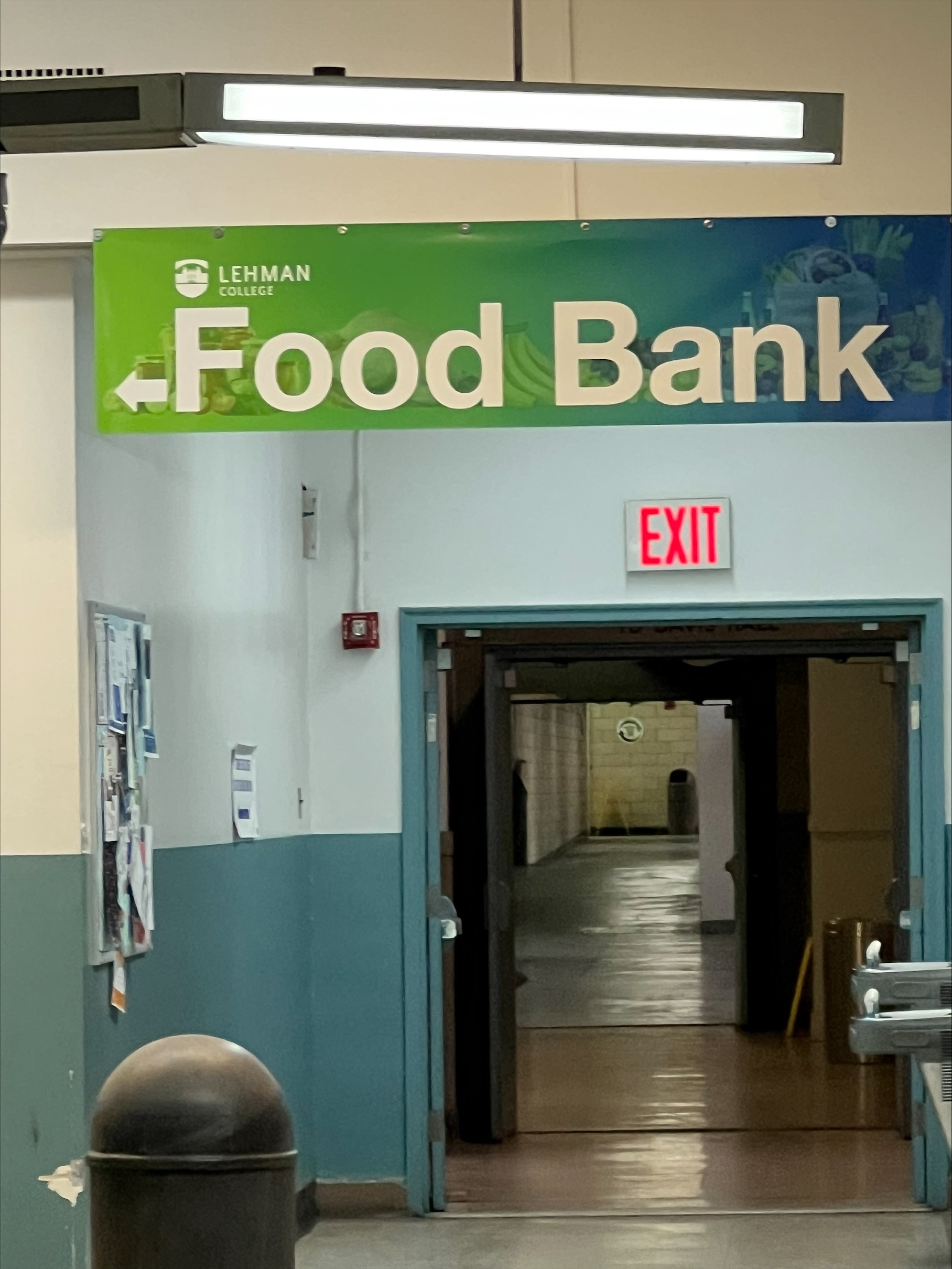
Photo by Jada Duffus
By Jada Duffus
Herbert H. Lehman College’s Food Bank is often open on Wednesdays and Thursdays in Room B015A in the Old Gym basement. The bank provides students with access to fresh produce, grocery bags, and grab-and-go items to fuel students. During spring 2026, the food bank experienced an increase
in numbers due to many current issues increasing food insecurity.

Dr. Jay Jones, director of Student Support Services Programs, said, “We have seen a steady increase in students seeking support as a result of rising financial instability, challenges with SNAP
benefits, and increasing fears about their future.” She also mentioned that awareness within the campus, as well as destigmatizing getting help, has urged more students to seek to use this resource.

Gabriela Rodriguez, who manages the operations daily, noticed a rise in 2026 during the spring as well. “Some students have mentioned the SNAP benefits caused them to have less access to food and would come to the Food Bank just to find their dinner
that night.” She also talked about some students living in shelters and not having access to a stove or fridge, along with not being able to store frozen food.

Sabrina Garcia, a Lehman College student, said, “Lehman’s food bank currently supports students on campus by providing food and pantry items for those in need. Because the prices have
increased, it is more difficult to obtain donations from food vendors.” The Lehman community can contribute by adding members to help with donating cans and jarred goods with other pantry items.

“Food insecurity at Lehman College is closely tied to the rising cost of living and education, with increasing tuition, housing, transportation, and grocery prices forcing many students to choose between basic necessities,” Dr. Jones said.

However, increased demand has created new challenges for the food pantry to support the community. “One of the primary challenges we face is navigating the high cost of food, which increases our required spending to maintain a diverse range of options for our students,” Dr. Jones said.

Rodriguez also mentioned how infrastructure and space limitations can have a negative impact on the operation. “The biggest challenges we are facing are [a lack of] Wi-Fi connection, space
in our freezers (this causes us to order less frozen items), storage
space in general, and the check-in process. All of these have been brought to light, and it’s under review,” Rodriguez said.

Monetary donations are essential because they extend the bank’s budget, allowing the team to support more students at Lehman. “Cash contributions also allow us to purchase specific high demand items we know students need and allow us to consistently stock
culturally diverse food options that may not always come through traditional donations,” Dr. Jones said.
“Students today are not just students. Many are providers, caregivers, and full-time workers. When basic needs are unstable, anxiety becomes almost inevitable.”
— Dr. Marta Gil, psychologist
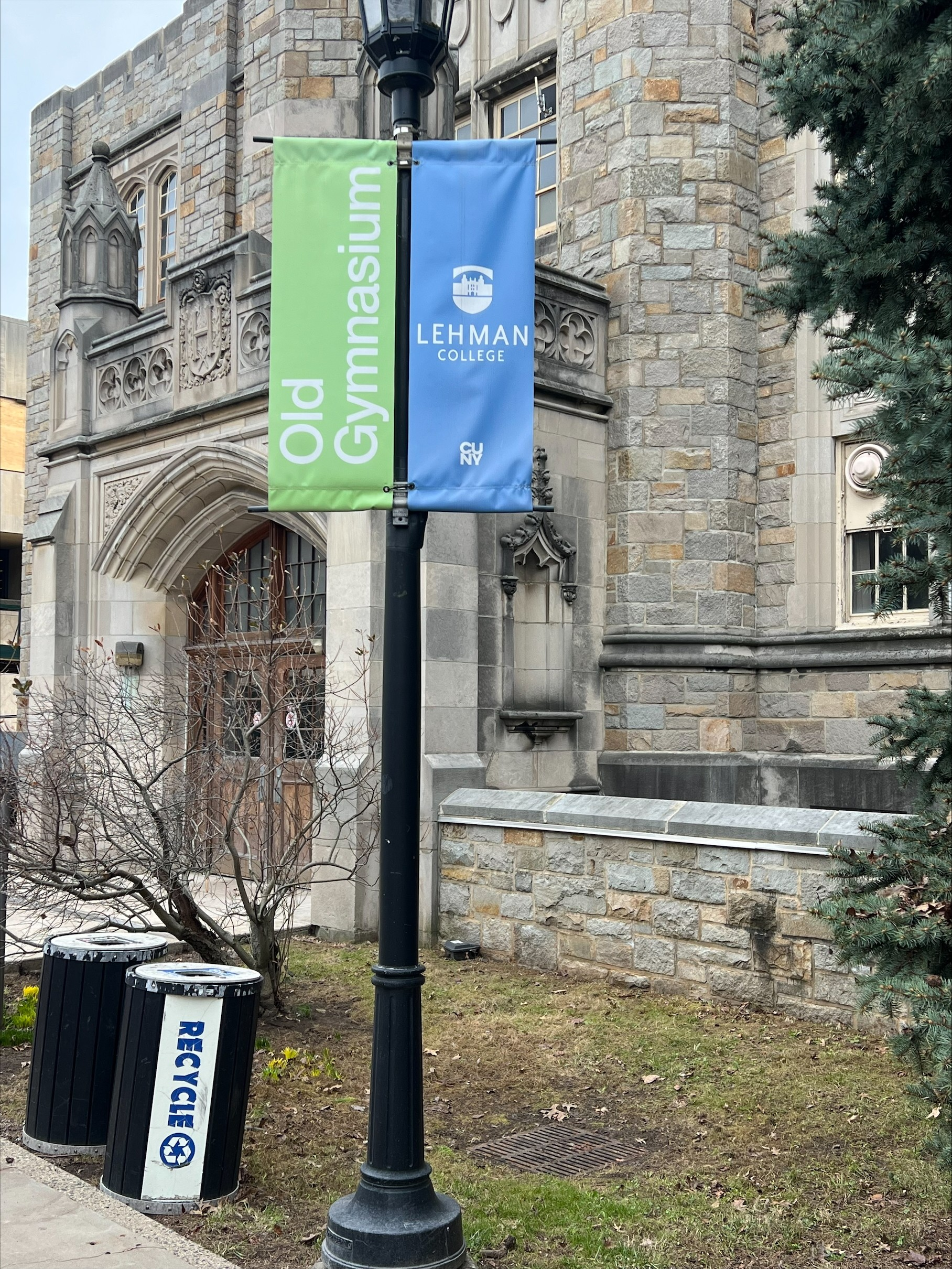
Photo by Jada Duffus
Homelessness Keeps Rising in New York City
Homelessness within New York City and the Bronx in 2026 continues to rise, with residents and social workers noticing inflation, high rent, and limited access to mental health services as key factors contributing to the increase.
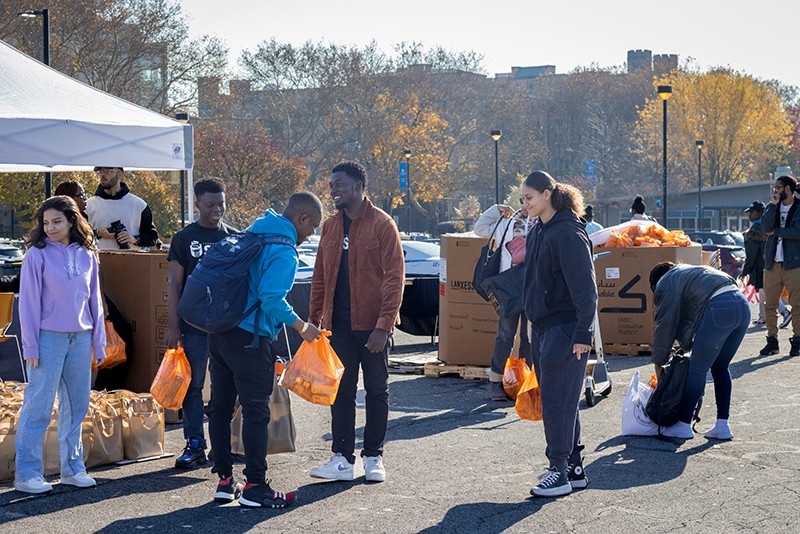
Photo from Lehman Website
By Arlin Rodriguez

Homelessness within New York City and the Bronx in 2026 continues
to rise, with residents and social workers noticing inflation, high rent,
and limited access to mental health services as key factors contributing to the increase.

According to Claudia Mendez, a Bronx social worker and Lehman College alumna, “Homelessness increased in 2024, and with 2025 data expected later this year, I would not be surprised if that upward trend continues. Both children and adults are being significantly impacted, facing instability that affects their health, education, employment opportunities, and overall well-being.”

Mendez also said that service reductions are worsening the crisis. “Many communities are seeing reductions in services and funding that are meant to address homelessness,” she said. “When support systems are cut back while the need continues to rise, it creates an even greater challenge for individuals and families trying to regain stability.”

Bronx resident Diana Barrientos, who works in social work administration, pointed to the cost of living in New York City as still being too high—even for those living alone. “In New York City, the rent is way too high,” Barrientos said. “The wages don’t equate with the standard of living, which causes people to not be able to pay their bills and, ultimately, sometimes even getting laid off and not being able to have a place to live.”

Recent extreme winter conditions have highlighted the risks faced by people experiencing homelessness. A February report from The
Guardian noted that at least 17 people died during severe cold weather in New York, with 13 deaths linked to hypothermia. Additional reporting from THE CITY found that city officials were questioned during a City Council hearing tafter multiple cold-related deaths among people experiencing homelessness during the January–February cold snap.

Community members also emphasized the connection between
homelessness and limited access to mental health care. Barrientos described barriers people face when trying to seek support. “Some
people don’t know where to look, especially in a time when they’re too
lost in their mind.”
“When support systems are cut back while the need continues to rise, it creates an even greater challenge for individuals and families trying to regain stability.”
— Claudia Mendez, Bronx social worker and Lehman College alumna
Jayla Booker, a Lehman College public health major who lives and works in the Bronx, said community advocacy could help reduce those barriers. “What communities can do to make mental health more affordable is to use their platforms, if they have one, to advocate how important mental health is,” Booker said.

Mendez suggested partnerships with established agencies to expand access. “Communities and organizations can improve access to mental
health care by building strong connections with agencies that provide
free or low-cost services,” she said, citing groups such as the National Alliance on Mental Illness and the New York State Office of Mental
Health. She also noted that resources such as the 988 Suicide & Crisis
Lifeline offer free, 24-hour support.
“Food insecurity at Lehman College is closely tied to the rising cost of living and education, with increasing tuition, housing, transportation, and grocery prices forcing many students to choose between basic necessities.”
— Dr. Jones, Director of Student Support Services Program

CUNY Doubles Down on Support for Immigrant Students
This year, in response to immigration policy changes made by the current federal administration, the City University of New York, or CUNY, launched the CUNY Immigration Assistance Project, or CIAP, whose services provide free immigration and legal support to CUNY students and their families.

CIAP Banner
By Gilbert AreizagaThis year, in response to immigration policy changes made by the current federal administration, the City University of New York, or CUNY, launched the CUNY Immigration Assistance Project, or CIAP, whose services provide free immigration and legal support to CUNY students and their families. Dr. Jermaine Wright, the vice president of Student Affairs, was among the staff who worked closely in the project’s development and commented, “This is an important initiative and a tremendous resource for our students and their families. This program reflects CUNY’s deep commitment to supporting immigrant students and ensuring that every member of our diverse community has the opportunity to pursue their educational goals.”
Immigration services already existed at CUNY, but with the Trump administration’s crackdown on immigrants, some students are now at greater risk of deportation. While CUNY’s Citizenship Now! program aids students in becoming citizens, gaining citizenship for their family, renewing immigration documents and more, CIAP complements these preexisting services by providing help in more time-sensitive situations like court hearings, detainment and travel.“We want Lehman students to know that we are committed to supporting them on their journey.” — SUZETTE RAMSUNDAR, DIRECTOR OF CAMPUS LIFE
Immigrant and undocumented students account for a sizable portion of CUNY’s student population, and Lehman College has also begun to increase support for immigrant students. On Tuesday, Oct. 7, the school hosted a webinar by the Immigration Defense Project, or IDP, called “Keeping Our Communities Safe,” which focused on what to do when confronting Immigration and Customs Enforcement, or ICE, agents.
The linchpin of this presentation was the message “We Keep Each Other Safe.” Led by William Depoo, an organizer working with the IDP, the meeting gave brief historical background on U.S. immigration policies and agencies before reviewing how ICE operates, including how agents choose who to pursue and what tactics they use to detain someone. Depoo followed that with a “Know Your Rights” presentation, laying out what rights citizens, regardless of immigration status, are able to invoke in the home, in their car and in public. The section included scripts and information about what ICE can and cannot do. Depoo made a point to tell the participants, “Do not leave any passports or foreign documents at home.” In the event of a search, any documents found can be used in court hearings. These could be hurtful to someone’s case, especially if ICE has access to other records like court dates and previous addresses.

Depoo also explained what someone should do if they or someone they know is detained, including instructions on the best way to act in the moment and resources such as ICE’s detainee locator. He emphasized the need for a safety plan, as well as a strong urge to refuse to sign any documents or speak to agents before seeing a lawyer.

Depoo closed with what to do if someone is a witness to ICE activity. In reporting an ICE incident, he advised that bystanders should supply all parts of the acronym SALUTE, which stands for size, activity, location, units/uniforms, time and equipment.

He also reviewed citizens’ rights, such as the right to record, what ICE is legally allowed to ask of you if they confront you and what not to do during a confrontation, like reaching for your pocket.

“We want Lehman students to know that we are committed to supporting them on their journey to degree completion and will work to mobilize our resources to ensure they have the support they need to succeed,” said Suzette Ramsundar, director of Campus Life.
Undergrad Majors & Minors Fair Orients Students
On Oct. 23, students filled the Apex gym building to explore the academic programs Lehman offers at the college’s annual Undergraduate Majors and Minors Fair. Hosted by the Office of Undergraduate Academic Advisement (OUAA), the fair was designed to help students discover different majors, minors and career pathways that match their goals and interests.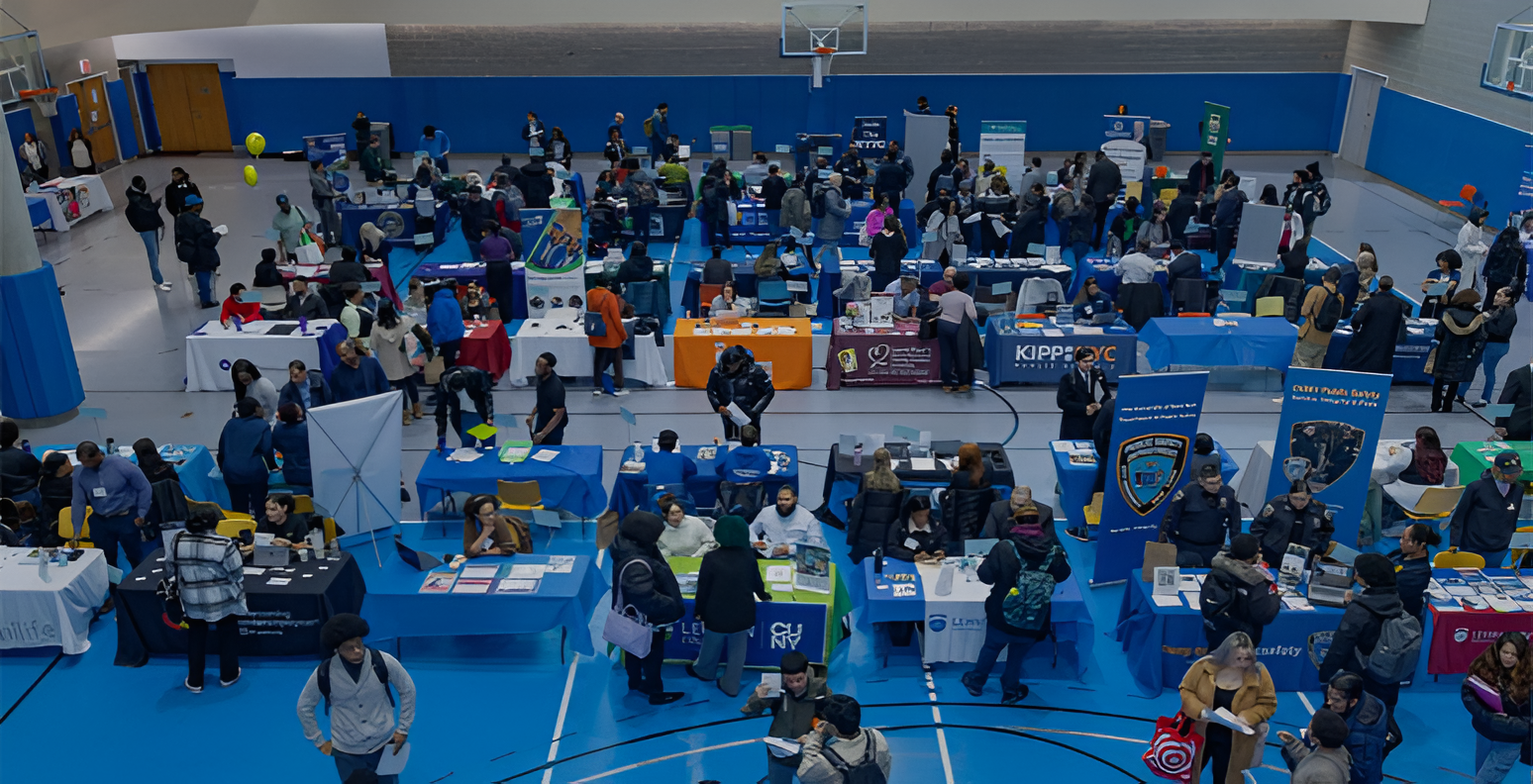
Participants gathered at the fair • Image provided by the Lehman College Website
By Mahdi MahdiOn Oct. 23, students filled the Apex gym building to explore the academic programs Lehman offers at the college’s annual Undergraduate Majors and Minors Fair. Hosted by the Office of Undergraduate Academic Advisement (OUAA), the fair was designed to help students discover different majors, minors and career pathways that match their goals and interests. The event featured staff, advisers and student representatives who handed out pamphlets and answered questions.
For Aliyah Alisa, a nursing major, the event was a great aid. “I already knew I wanted to go into nursing, but talking to the faculty helped me understand what classes I should focus on and how to prepare for the clinical...It made me feel more confident about the path I've chosen.”
Some students came to confirm their choices, while others were searching for direction. Mariana Ceesay, a computer information systems (CIS) major, said she wasn't sure if she had chosen the right field, but the fair helped her see the possibilities within her major. She explained, “Before coming to the fair I thought CIS was just about coding. After speaking with one of the faculty I learned it’s a mix of technology and business. There are so many career options from data analysis to system management. That made me even more excited about what I'm studying.”
She also discovered valuable information about development opportunities. “One of the department advisers told me about the internship programs that connect[ed] with my field. The fair really opened my eyes as it’s not just about taking classes, it’s about getting experience that prepares us for real jobs.”“Even though we all have different majors, we’re going through similar experiences trying to find what fits best for us.” - MARIANA CEESAY, CIS MAJOR
For Eric Santiago, a business administration major, the fair provided a clear picture of how his coursework connects to his career goals. He shared, “I've always been interested in business and entrepreneurship. I got to talk to the faculty from the economics and business department who explained how the courses I'm taking now build the foundation for management and finance careers.” That made him think more seriously about going to graduate school after Lehman.

Santiago said the event also revealed new academic options he hadn't considered before. “I didn't realize there were so many different paths in business administration. Learning that I could focus on marketing or management made me feel like I have more control over shaping my education.

Sakib Uddin Shiker, a psychology major who works as a college assistant for the Office of Undergraduate Academic Advisement, worked at the fair. He remarked, “My advice [for] students would be to plan ahead and not wait until the last moment on anything. They should be getting early advisement before registration starts and should pick their majors ASAP so that their goals are clearer and can lead to a smoother journey.”

Beyond academic exploration, the fair fostered a strong sense of community, with students from different disciplines sharing experiences and supporting one another. “Even though we all have different majors, we’re going through similar experiences trying to find what fits best for us,” Ceesay said.

“The fair showed me that college is not just about getting a degree. It's about exploring who you are and what you want to become,” Alisa said. “It's nice to know that Lehman gives us the tools to figure that out.”
Students Dig In: Unearthing the Hidden History of the Enslaved African Burial Ground
In unearthing this hidden history, Lehman students bring Black tragedies and accomplishments to the eyes of the world; in doing so, they break the generational cycle of Black stories going unknown and unheard.
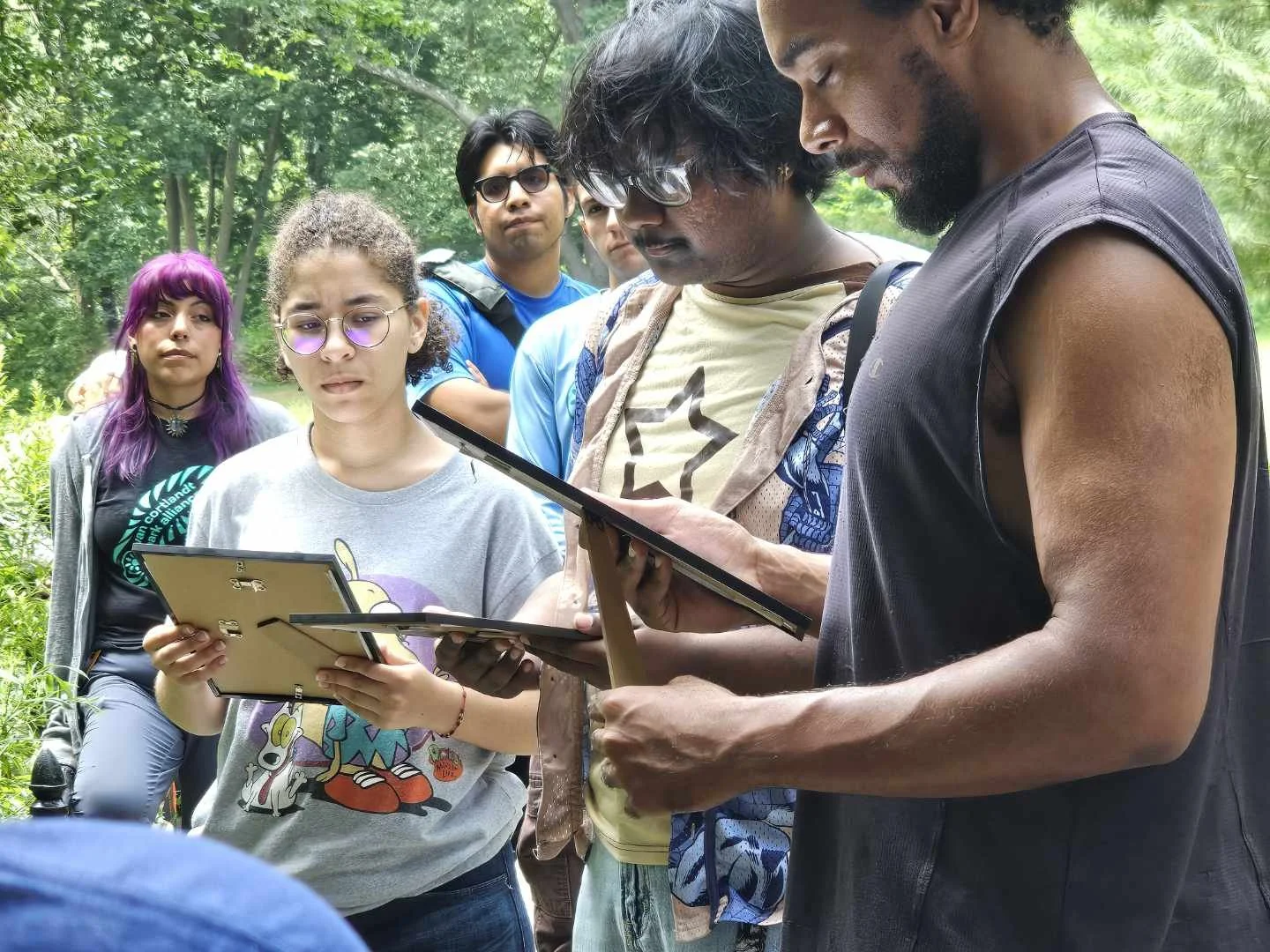
Lehman students participating in Students Uplifting Ancestral Spaces.By Soleil HendyLocated in Van Cortlandt Park, along the eastern edge of the Kingsbridge Burial Ground, is a mass grave that was identified in 2019. Inside are bones of young children, men and women, the enslaved Africans who were worked to death on the Van Cortlandt plantation. Of utmost importance to the Van Cortlandt plantation’s day-to-day operations, these individuals were “responsible for its functions and economic gains for over a hundred years,” according to the NYC Parks website.In unearthing this hidden history, Lehman students bring Black tragedies and accomplishments to the eyes of the world; in doing so, they break the generational cycle of Black stories going unknown and unheard. Audrey Adon, a winner of the Jeanette K. Watson scholarship and the current president of the Students Uplifting Ancestral Spaces club, is one of these student researchers.“My
first encounter with this history in the Bronx was a
field trip in middle school. We’d gone to... [tour] Van Cortlandt [and] had gotten to the slave quarters,” she explained. “When I asked about it... they didn’t explain it all... It was the repeated indifference towards this that inspired me to become more involved in the project when the opportunity arose.”Adon chose to work with SUAS to research and expose more of the stories of these individuals to the light of day, forcing society to engage with and recognize the lasting effects of slavery within America. She worked extensively with Dr. Moyagaye Bedward, assistant director of the Office of Prestigious Awards, and Professor Alice Augustine, founding director of Campus Honors and Student Engagement (CHASE). Together they combed through the amassed documents relating to the Enslaved African Burial Ground; in between archival research, the cohort of student researchers worked on the beautification of the grounds. Audrey said, “I was mostly digging for people’s names… I was given the task of
finding people who lived in the Bronx specifically.”
Enslaved African Burial Grounds sign in Van Cortlandt ParkThe individual that who stuck out to her most during research was Henry Bikes, an enslaved person owned by Lewis Morris--—part of the family Morrisania is named after—- -who lived to a remarkably old age: around 98 at the time of his death. “It was shocking at the time, especially for an enslaved person. He also fathered over 200 children, which means he was likely forced to procreate by the Morris family.”The Lehman students and faculty’s research mainly revolves around the Valentine Varian family, with the recovery of a missive from their belongings suggesting the existence of enslaved people on their plantation, who were used as currency in the payment of the debt. Student researcher Anthony Johnson explained how the research was assigned."Paula [Swanzy] was doing working with diaries of people who were living there. Amna was doing topology. I did the house structure; how they built it and how they moved it across the street. How they uprooted it, and the structure of how they rebuilt it."Amna Ishaq, the vice-president of SUAS, chimed in: "We are still in the process of researching, but the most interesting thing I discovered was how the identities of these individuals were stolen from them. These slave owners made their fortunes and grew their businesses on the back of these enslaved people.... but treated them as property."SUAS members presented all the information at a panel inat a conference at Lehman College on May 13th, in collaboration with the Student Research Advisory Board (SRAB). “I really felt that we had accomplished something big," Amna said.Augustine spoke about the connection between the hidden histories program and personal spiritual experiences she had while visiting Van Cortlandt Park. “I’ve been walking in this park for a very long time...When I started doing my research I was like ‘This is... [the Van Cortlandt family] burial plot’, and they had a plantation, so where were the bodies of the people that worked the land?”When they
finally had marked the plot of land in Van Cortlandt as the Burial Ground, Augustine would take students and colleagues on walks along Van Cortlandt trails, asking them to walk reverently in the presence of her ancestors.“It started with Vani Kannan,” (who helped co-create the summer program in 2021, before Bedward assumed Kannan’s role. “[We] started this project because we walked here in the mornings, especially through the pandemic,” Augustine recalled with a kind smile, her enjoyment of her research and appreciation for her colleagues palpable. “I think the Bronx is everything. Even back then we were a haven for people who were resisting in their own way. In the only way they could.”“WE WERE A HAVEN FOR PEOPLE WHO WERE RESISTING IN THEIR OWN WAY.”
--Michelle Augustine, founding director of CHASE
Inaugural Accessibility Fair Empowers Students
Lehman College, in collaboration with their Student Disability Services (SDS), held their first-ever Accessibility Fair throughout the Lehman campus on August 26th and 27th. Booths featured Information about various disabilities, how Lehman can help students who qualified for disability services, and interactive activities for participants.

Students bringing awareness about the services available at CUNYPHOTO CREDIT: VITORIA REISBy Gilbert Areizaga Lehman College, in collaboration with their Student Disability Services (SDS), held their
first-ever Accessibility Fair throughout the Lehman campus on August 26th and 27th. Booths featured Information about various disabilities, how Lehman can help students who qualified for disability services, and interactive activities for participants.Additionally, third- party organizations such as Access VR and Bronx Independent Living Services were present with information and connections to their own resources for students who attended. The fair served not only to inform students about disabilities and how they affect people on a day-to-day basis, but also to highlight the number of resources available to students.The genesis of this event started with Emily Willen, a master’s student at Lehman College who wears many hats, including Office Manager at the Student Government Association, Leadership Coordinator at the Office of Campus Life, and, in particular, a summer internship with the SDS center. This past summer she conceptualized this event, and, with her wide range of connections made it a reality.A huge motivation for Willen’s was her own experience with disabilities. With conditions like dyslexia and arthritis, Willen found herself struggling in school. But, as Willen explained, “Accommodations really do make a difference in success. Since I've been getting accommodations, I've been a straight-A student.”Willen said that stigmas and a lack of understanding of resources account for a sizable chunk of missing enrollments in disability services and college as a whole. Vitoria Reis, a student at Lehman who acted as a manager on-site for both sessions, concurred,. “When I entered Lehman, I don’t think I knew the challenges. I didn’t really know how to navigate it…I didn’t really know how they could help me.”
Student managing a table at the fair“SO MANY STUDENTS ARE ASHAMED OF HAVING A DISABILITY BY THEIR NAME.”
--Emily Willen, a master’s student at Lehman CollegeThe same rings true for Christian Chavez, a freshman at Lehman who, when asked if he knew about the offered services, said, “No. I saw the wheel chairswheelchairs and the ramps, and I thought, ‘Oh people who can’t walk or are paralyzed.’. But after seeing this it makes me realize that this school genuinely wants people to feel more welcome.”To register for disability services, a student must
first recognize that they have a disability. The fair sought to give visibility to these issues and their related services through tables highlighting different types of disabilities, including visual impairments, hearing, and energy. Some tables included an interactive experience, a core part of the fair that helped to start to "building that empathy," as Reis put it. One such experience was a blindness simulator, where participants wore blindfolds and tried to walk a short distance with a white cane. Another table had spoons that visitors could decorate and keep as part of a demonstration of spoon theory, a philosophy that helps illustrate how people with chronic illnesses need to more strictly manage their time, with spoons representing to how much energy a task takes to complete. Other tables included tools available to students, such as a pen that writes and records phrases, or buttons that can represent different words or sentences.“So many students are ashamed of having a disability by their name,” Willen said, and just as many don't know that they do not have to struggle through their academic careers, or even their lives, without ever receiving help. But help is not only available, it is a driver of real change. To empower more students, Willen also hopes to bring a fair like this to more CUNY campuses. Because, she said, when she tells people she has a disability, the most common reaction is shock that she is able to do so much."And that's the whole point. People with disabilities CAN do things."

Campus Life Celebrates Student Leadership
On April 30 in Lehman College’s Student Life Building, Campus Life & Student Affairs hosted a celebration bedazzled with balloons and fancy decor to recognize the hard work student leaders dedicated throughout the spring semester.

Multiple student leaders, including Sukul, displaying certificates
PHOTO CREDIT: MILDRED PEREZ
By Iffath Liaquat On April 30 in Lehman College’s Student Life Building, Campus Life & Student Affairs hosted a celebration bedazzled with balloons and fancy decor to recognize the hard work student leaders dedicated throughout the spring semester.Campus Life staff announced the award winners, such as "Club of the Semester" and "Most Engaging Club," and went from table to table, allowing guests to shout out their club's name. They also awarded certificates to students who completed one or more of the leadership programs during the spring semester and called up student leaders graduating this semester to bestow them with honor cords to wear to graduation. Professional photographers were available to snap headshots for students’ LinkedIn profiles.Yasiris Bonilla, the president of a new club, BoxingKaraoke, received multiple awards for it, including “Best New Club” and “Club Leader of the Semester.” Bonilla noted, “I started this club for my passion for singing and boxing, and I’m grateful for the recognition.” The vice president of the club, Omadai Sukul, was also a participant in the Introduction to Leadership, a mentor at Urban Male Leadership Program, and a volunteer
coordinator.“I was then introduced to the Urban Male Leadership Program by a friend,” Sukul said. “I looked around and found strong, dedicated students who are driven to become someone in life. These are mentors and mentees who know that there are no limits to their potential.” She expresses indebtedness for all that UMLP and leadership programs had done for her. “David Charcape [told us that] ‘Leadership is the ability to inspire, influence, and guide others towards achieving a common goal or vision.’ He educated us [on] how to always appreciate others for their excellence and celebrate victories by showing that I care.”
Owoaje posing with student leaders
Oluwabusayomi Owoaje, an upper sophomore majoring in biology who participated in the Leadership for All in Fall 2024, has since joined the Student Government Association as a senator for the 2024-25 academic year and is a Crisis Text Line volunteer counselor. Owoaje is also the secretary of a new club, Voice of Impact, a place for peers to exercise their right of speech and spread awareness of current issues. “Knowing me, a year ago, I would have never [seen] myself in these positions. [Taking the Leadership for All program] was really eye-opening because I never truly saw myself as a leader, or rather, I never knew I was capable of being one. [It improved my] knowledge of the qualities of a leader and my desire to make a change.”
Dr. Narain holding a certificate next to Suzette Ramsundar
Dr. Shantusha Narain, MD, a participant in many leadership programs since 2012, said joining them helped her skyrocket her career in medicine, making her a strong candidate for medical school. “At first, I was skeptical because I had so many responsibilities under my belt,” she said. “I became convinced when I found out that the sessions were available at a time when I didn’t have classes... and that they were going to provide the textbooks and materials... That was one of the best decisions I made... I started doing community service projects and giving back to the community... I began to realize that my voice matters.” Dr. Narain advises students that “leadership doesn’t end when you finish your degree; it keeps going and makes you stand out no matter what career choice you have in mind.” Emily Willen, who is pursuing a master’s in Health Education and Promotion, participated in multiple leadership programs before becoming the Leadership Coordinator. She said her academic and social journey has improved since she joined these programs, which broke her way into many leadership positions on campus. “It raised my confidence and self-esteem... I went from being too scared to order food at a cash register at a restaurant, to giving a TEDxCUNY talk.” For students wanting to take on leadership roles, Willen advised,
“My advice is to expose yourself to different opportunities. Every experience counts and can build towards someone
developing and harnessing leadership skills... I always try to connect students to opportunities in which they’re passionate, and it gives me joy to see them get these opportunities so that they can thrive outside of the college.”
“LEADERSHIP DOESN’T END WHEN YOU FINISH YOUR DEGREE.” – Dr. Shantusha Narain, MD

THE F WORD: FOOD! Or is it French?
Lots of chopping, sautéing, and flipping later, participants can create something out of Julia Child’s The Way to Cook, a snapshot of the repertoire of an impeccable culinary icon. These possibilities were on display on Tuesday, March 25th, when the Nutrition Club hosted an event showcasing the talents of the former celebrity chef, Le Cordon Bleu graduate, and haute cuisine connoisseur.

Photos by Soleil Hendy
By Soleil Hendy A visitor entering one of Lehman College’s student kitchens might think they had accidentally stepped behind the scenes at a Bronx bakery. Flour is stacked in 18-quart tubs next to the sugars, both brown and white, heavy cream whipped stiff and not yet butter. The kitchen’s equipment is a sight to behold: stainless steel countertops with state-of-the-art ovens, handwashing stations, and racks where all the tools needed hang off in the far end of the room.Lots of chopping, sautéing, and flipping later, participants can create something out of Julia Child’s The Way to Cook, a snapshot of the repertoire of an impeccable culinary icon. These possibilities were on display on Tuesday, March 25th, when the Nutrition Club hosted an event showcasing the talents of the former celebrity chef, Le Cordon Bleu graduate, and haute cuisine connoisseur. Sui Ling Gilbert and Angelina Woltmann, Nutrition Club president and vice president respectively, welcomed this reporter and novice cook into the world of cuisine creations with excited smiles. “We actually don’t have many [cooking] skills either, but we get by,” Sui said reassuringly while bustling about the well- maintained kitchen that has become a familiar space for club members. “We’re in this room a lot for our DFN classes,” Sui said, referring to Dietary Food and Nutrition. “Food and nutrition is the major, so we use Gilet Room 425 often.” As they began preparing to recreate Julia Child’s ratatouille and her crepes, Sui spoke about her passion for cooking developing beyond a recreational hobby, resulting in her Food & Nutrition major. “During high school, I fell in love with the major. Yeah, I cooked when I was younger, but it was mostly just things off the internet...” Recently, she’s found herself enamored with German breakfasts with Asian influences, as per her parents’ preference. “Lots of good bread in a German breakfast.” Sui, a gracious host, works efficiently together with Vice President Angelica as her valiant right hand. Angelica explained that she fell into cooking a little differently than Sui’s straight shot from high school. “I didn’t really get into cooking until college,” Angelica said, voice undercut by the swish of hand-whisked cream. “I was actually a music major before Food & Nutrition. I didn’t even know Sui until I joined the club and found the major.” A splendid friendship blossomed from it all, and their teamwork is on point. After attempting to hand whisk some heavy cream into whipped cream, this reporter’s wrists got tired, so Angelica provided a hand mixer to get those “stiff peaks” as the instructions specified. Five more members from the Nutrition Club joined the action, including Raquel Lopez and Christine Marino, helping the small troupe cook the crepes and prepare toppings.“It’s one of the best ways to learn about someone’s culture.” - Lehman Nutrition club member Christine Marino.
Christine and Raquel imparted their individual wisdom as their creations sizzled on the stove. “It’s one of the best ways to learn about someone’s culture,” Christine said while sautéing the zucchinis for the ratatouille. “I don’t cook as much now, but I do sometimes on weekends. I first started learning by watching those, you know, those cooking channels on TV? I don’t know if they still have it, but that’s how I learned.” Raquel, a seasoned chef in her own right, chimed in: “When I cook for my family, me and my mom have an agreement. I cook, they clean, and when the kitchen shuts down for the night, whoever goes in there is on their own!” The fruits of their labor were oh, so delicious. The crepes were light, thin, and fluffy. Golden brown crusted on both sides, piled high and set aside in a baking tray as they prepared the toppings for plating. Blueberry jam settled atop the stove, melted chocolate drizzles, Biscoff butter, thick whipped cream with a hint of vanilla, a dash of sugar, and strawberries to drizzle on top. It tasted divine, cloyingly sweet, and decadent. The ratatouille was seasoned to perfection, even if the recipe didn’t call for it. It sizzled gently when it came out of the oven, the refreshing aroma of fresh eggplant, softened and salted zucchini inundating the senses. 
February Club Fair Draws Hundreds of Curious Students
When the clock struck 2:00 on Feb. 19, the doors to the East Dining Hall in the Music Building swung open, and the hard work of over 50 clubs became available to Lehman's student body at Club Fair Spring 2025. This semester’s event packed the hall with students scurrying past one another to check out the wide array on offer.

Photo by Soleil Hendy
By Soleil HendyWhen the clock struck 2:00 on Feb. 19, the doors to the East Dining Hall in the Music Building swung open, and the hard work of over 50 clubs became available to Lehman's student body at Club Fair Spring 2025. This semester’s event packed the hall with students scurrying past one another to check out the wide array on offer.“Club Fair Fall 2024 was probably the highest attended Club Fair I’ve seen in many years… about 500-600 students came,” said David Charcape, the assistant director of Lehman’s Office of Campus Life which organized the event. Charcape has overseen multiple Club Fairs, and said the event seems to have a consistently good turnout. “[February’s] fair was also well attended, with around 300 students coming to check out the event.”Maryam, a member of the Lehman Nutrition Club, sat at the head of the club’s table serving drinks made by bike blender, offering students to give it a spinto win a healthy smoothie. She said she joined the club to expand her culinary repertoire. “Baking was something I had no clue how to do, and I heard they would teach you,” she explained. “I’ve gotten pretty good at it since I’ve joined! The Nutrition Club provides all the materials too, so no worries about having to bring your own stuff.”Several other students reported that they enjoyed the event, and not only for the free snacks and drinks.At another table, Isabel Pozo, or “Izzy”, the head of the Google Development Student Club, promoted it as a hub for students interested in coding and other aspects of STEM, a place to learn and geek out with fellow fanatics. She also described the rigorous process of beginning a Google Development chapter at Lehman, which required a specialized application and year-long program commitment. Pozo said the club has had a spike in activity in spite of its rocky start, and is eager to welcome new folk into its ranks. “We use official Google web development materials to teach our members!” she added.“It was really helpful to have that community… those people who remind you that enjoying yourself is what’s really important.” - Gwendolyn Acosta
Gwendolyn Acosta, a sophomore and member of both the Lehman’s Modelling Club and Network for Stage and Screen Artists, shared how these communities helped her grow her confidence. “In most fashion spaces y’know height would have held me back,” she said. “But in the club nobody cares! Like it was really helpful to have that community… those people who remind you that enjoying yourself is what’s really important.”
Blueprint to Success Welcomes All to Spring 2025
On February 5th, numerous students attended the Blueprint to Success (BTS) reception to learn how to become more active on campus. Held in the Music Building and hosted by Lehman’s Office of Students Affairs in collaboration with the Urban Male Leadership Program (UMLP), the Wellness Center, and the Counseling Center. The event promoted programs designed to help students develop fundamental skills, such as leadership, teamwork, and even CPR.

Students at Blueprint to Success on Feb. 5
By Iffath LiaquatOn Feb. 5, numerous students attended the Blueprint to Success (BTS) reception to learn how to become more active on campus. Held in the Music Building and hosted by Lehman’s Office of Students Affairs in collaboration with the Urban Male Leadership Program (UMLP), the Wellness Center, and the Counseling Center, the event promoted programs designed to help students develop fundamental skills, such as leadership, teamwork, and even CPR.Christian Davila, a Lehman student and member of UMLP, helped set up the event and shared his experience of special opportunities through that program. “It’s an amazing experience to get involved and help others out,” he said. As a member of the Leadership for All and Introduction to Leadership programs, he added that “it’s important to take advantage of all the resources available on campus.”“We want to encourage our students to become more active members...[and] take advantage of the many opportunities we have.” -- Dr. Conrad Walker, Assistant Vice President for Student Affairs at Lehman College
Dr. Conrad Walker, Assistant Vice President for Student Affairs, introduced BTS initiatives, explaining how the program helps students from varying levels become more involved in their community. “It’s easy to register for different events on campus using Lightning Connects,” he said. “We want to encourage our students to become more active members...[and] take advantage of the many opportunities we have.”Johnny Lozado, the associate director of the UMLP and CREAR Futuros, also encouraged students to take initiative and join the UMLP if they wish to gain leadership skills. “Come stop by room 302, where we can hook you up with information on joining us. We have resources such as mentorships and annual retreats!”There are certain events on campus that help students fulfill the criteria needed to earn their own BTS badges. On the Lehman Lightning Connections site, after logging in, students can click on their profile to find the “Paths” button to track their progress toward earning their own badge. Many of the campus meetings required to earn a badge are categorized as developing either engagement or leadership skills that are sought after by employers. At the end of the semester, once they earn all the credit needed, they can add the badge to their LinkedIn profile or resume. Sessions that counted towards a BTS badge last semester were a CPR/ First Aid Event, a training by the tutoring center, and sessions held by the Career Exploration and Development Center.The reception ended with UMLP members serving attendees delicious foods, creating a lively atmosphere, and organizers passing out gifts. Counseling Center staff also handed out daily planners and invited students to learn more about their services and not be afraid to seek their help while going through hardships.
Internship Course Helps Liberal Arts Majors Navigate Career Paths
Hum 470, a five-credit asynchronous class, allows students to gain experience from private or public workplaces using skills they have gained from studying the liberal arts. This means students can participate in internships or jobs while being supervised in the course, and have this experience count towards their academic progress.

By Brian CortesHum 470, a five-credit asynchronous class, allows students to gain experience from private or public workplaces using skills they have gained from studying the liberal arts. This means students can participate in internships or jobs while being supervised in the course, and have this experience count towards their academic progress.One of those students is Leonard Barret, a Lehman student who interned as a New York City Summer Youth Employment Program (SYEP) Program Aide. A big part of his experience was embracing real-world challenges, such as dealing with time management. “I think balancing school and work is always a difficult kind of thing,” said Barrett, who received career-focused training in his internship. “That was a little overwhelming, but luckily with this course in particular, it was able to be an extension of my work…because I felt like I was getting better at my job with the videos that I've been watching and the articles that I was reading for this class.”“It accepts students where they are, job [or] internship-wise, and then helps all of them to develop the professional skills and understandings they need to get to the next step in their college-to-career journey.” -- Paula Loscocco, Lehman College English professor
Paula Loscocco, an English professor who teaches this course, said, “It accepts students where they are, job [or] internship-wise, and then helps all of them to develop the professional skills and understandings they need to get to the next step in their college-to-career journey.” This means that if a student is currently engaged in an internship or job that fulfills the requirement for the course, they can continue to work at it and receive credit for it, making scheduling an easier process for them.This structure worked well for Ashley Soto, who was able to count her job as venue coordinator as her internship this semester. Reflecting on how she coped with this kind of school-work relationship, she said it is giving her valuable insights. “I'm learning a lot, which is why I'm pretty excited for the most part,” she said. “It feels good taking this internship with my job …because I find myself each week reflecting on something new I learned.”Other students reported experiencing various forms of personal and professional growth, especially learning and progressing in the fields towards which they aspire. Towards the end of the semester, students must apply for a "next-step" position, submitting a resume, LinkedIn profile and cover letter to ensure they can leverage the experience into bigger career opportunities.Hum 470 also allows students to glimpse their possible futures, helping them decide if the industry they wanted to participate in is the right fit for them—or not. ModupeoreRaji, an English major that wanted to experiment with the world of theater, was able to take that chance in the course.“Before I took this internship, I was an English major with ideas of going to publishing, maybe becoming an editor, but learning more about the theater industry from Lehman Stages helped me get to know that it is feasible for me to have a career in theater,” Raji said. As students face their next steps post-university, Hum 470 provides a window onto possible paths ahead of them.
From Campus to Community: Lehman's Local Impact
Lehman College, nestled in the heart of the Bronx, is more than just an institution of higher learning. It serves as a beacon of hope and support for many individuals, including students, staff, and alumni.

By: Pamela Duran Lehman College, nestled in the heart of the Bronx, is more than just an institution of higher learning. It serves as a beacon of hope and support for many individuals, including students, staff, and alumni. Beyond its academic offerings, the college has established itself as a pillar of community support through various initiatives and programs addressing critical needs and fostering a spirit of solidarity. Delving into Lehman's resources reveals their efforts to advance the community they serve. The two most significant initiatives on campus are the Basic Needs Center and the Lehman Food Bank in the Old Gym Building. The Basic Needs Center is a comprehensive support hub in connection with CUNY Cares that addresses the following: Food insecurity support
Housing assistance
Financial aid
Mental health and wellness services
Quality healthcare
Transportation assistance
Technology support
CUNY Citizenship Now is a notable service coordinated through the Basic Needs Center, which provides immigration law services. This program is worthy of recognition for its valuable support to students navigating complex immigration issues. This enables students to focus on academic success without worrying about essential needs. The Food Bank, which cooperates with the Basic Needs Center, was formed in March 2017. It serves students and staff in numerous ways. The Food Bank services go as follows: Online grocery cards
Cooking demonstrations
Bulk bag groceries
Assistance with SNAP benefits
Resources for finding healthy food in the neighborhood
Diet suggestions and tips for eating well
According to their website, they have served over 100,737 meals to Lehman students. Notably, 87% of those students fear their food will run out within the next year, with 75% of those students living in the Bronx. The Food Bank also provides students with resources to find healthy food in their neighborhoods and offers diet suggestions and tips to ensure they eat well. Lehman College's community outreach extends to educational support as well. The Science and Technology Entry Program (STEP) aims to increase the participation of underrepresented and economically disadvantaged Bronx students in STEM fields. Lehman collaborates with Bronx schools to achieve this. This program prepares students for college entry and focuses on critical areas such as mathematics, science, technology, and health-related fields. Beyond that, it helps students with their core subjects, Regents preparation, college admission counseling, summer programs, and other forms of support in preparing students from middle through high school. The STEP program has specific eligibility criteria for students: Student Eligibility: • Enrolled in Grades 7-12 • Economically disadvantaged or from specific racial/ethnic groups (African American, Hispanic/Latino, Alaskan Native, American Indian) • Must benefit from academic enrichment
Economically Disadvantaged Criteria: • Meets income eligibility criteria (2021-26 STEP Income Eligibility Criteria) • Eligibility determined at first admission to STEP • Continued support available even if family income increases
Additional Eligibility Categories: • Recipients of family assistance or safety net assistance • Students in foster care • Wards of the State or county • Students eligible for free or reduced lunch based on family income
The Adult Learning Center (ALC) serves as a beacon of opportunity for adult learners. As one of the leading adult education programs in New York City, it annually serves approximately 800 individuals with free classes in Basic Education, English for Speakers of Other Languages (ESOL), and preparation for High School Equivalency diplomas. This initiative is vital in empowering adults in the community to further their education and improve their career prospects. It also allows them to discover scholarships, grants, and financial aid that can help them further their education and explore new, more stable career paths. The Lehman Jumpstart program further exemplifies the college's commitment to community service. This initiative prepares and supports college students to serve preschool children in low-income neighborhoods and instills a sense of community responsibility in Lehman students. By promoting school success for young children while providing leadership training and work-study opportunities for college students, Jumpstart creates a dual benefit for the college and the broader community. Many volunteer positions are available for any Lehman student to give back and connect to their community outside of Lehman. Three types of volunteer work are offered: short-term, long-term, and remote. The Community Engagement site provides various links and pages that can be used to find different volunteer opportunities, either in-person or virtual. As these programs continue to thrive at Lehman, we can see their ongoing impact on the diverse communities comprising the Lehman population. New programs to help students are emerging constantly and knowing where to look can make all the difference. By addressing students' basic needs, providing educational support, and encouraging community engagement, Lehman creates a positive impact extending beyond its campus, fostering growth and development throughout the Bronx. References and Additional Resources:

Coping with Midterm Stress
It’s that time of year again. When students are scrambling to build up stamina to seize the midterm testing season. The fall semester is more than halfway over, the Lehman community is feeling the pressure of being piled with exams, projects, and papers in order to test their knowledge.

Photo taken by Tim Gouw, uploaded on UnsplashBy Iffath LiaquatIt’s that time of year again. When students are scrambling to build up stamina to seize the midterm testing season. The fall semester is more than halfway over, the Lehman community is feeling the pressure of being piled with exams, projects, and papers in order to test their knowledge.
Maii is a sophomore and intends to major in speech pathology. She is part of a few different clubs such as the African Student Association, The Lehman Modeling Club, and the SEAMLSS (Seamless Educational Advancement To Maximize Lehman Student Success) internship program. This program requires students to get internships, career advice, and participation in various opportunities. She shares that she isn’t nervous about midterms, considering that most of them are projects, or essays, except for her French class. “All I know is if I study well, I’ll do well.” Maii encourages students to build confidence in themselves to prepare for their examinations, noting the effects of the self-fulfilling prophecy. “Professors usually [include]... what will be [on] the exam. If they focus… and study … they should be fine.” She urges that if anyone is having any difficulty, they should go to the tutoring center, and take advantage of the numerous resources available on campus.
Busayo Owoaje is a sophomore at Lehman College and is active in the Leadership for the All program as well as some clubs. But Owoaje has been swamped by her packed schedule and by many obligations in her personal life. When asked about midterms, she says she’s extremely overwhelmed and isn’t confident in her knowledge, but “this feeling can easily be changed when I start studying and practicing. Anything is possible!” Owoaje notes. To balance out the fear, Owoaje voiced that she puts herself into a positive and realistic mindset. “[I remind] myself that midterms [aren’t] the end of the world… I can [always] do my best later on.” To avoid the dire effects of over-studying, on the day of an exam, she maintains a calm atmosphere by listening to music or watching videos.
Omadai Sukul is a junior majoring in speech pathology and minoring in psychology and early childhood education. She is a part of the ACE program and a mentor for the Urban Male Leadership program. Sukul is the voluntary manager for the Caribbean Unity Club, while also managing two part-time jobs. She expresses feeling anxious and is constantly overthinking about midterms. However, with dutiful planning, she breaks down her schedule in order to deal with things one step at a time. Sukul shares that getting involved in college has helped her cope with stressful situations. “[I get] to socialize and meet… amazing students. [I learned] that [I’m] not alone on my journey, as life as a student can be stressful.” She reflects that these activities have helped her push past limits and attain useful advice.
Everyone is dealing with this time in different ways; from Omadai’s busy schedule, Maii’s self-assurance, and Busayo’s efforts for tranquility. The midterms provide different challenges for everyone. Being able to deal with such emotions is one of the trials of college life, a universal feeling, and a handy skill in life. But you can always turn to your community when you feel like you’re tipping over the edge.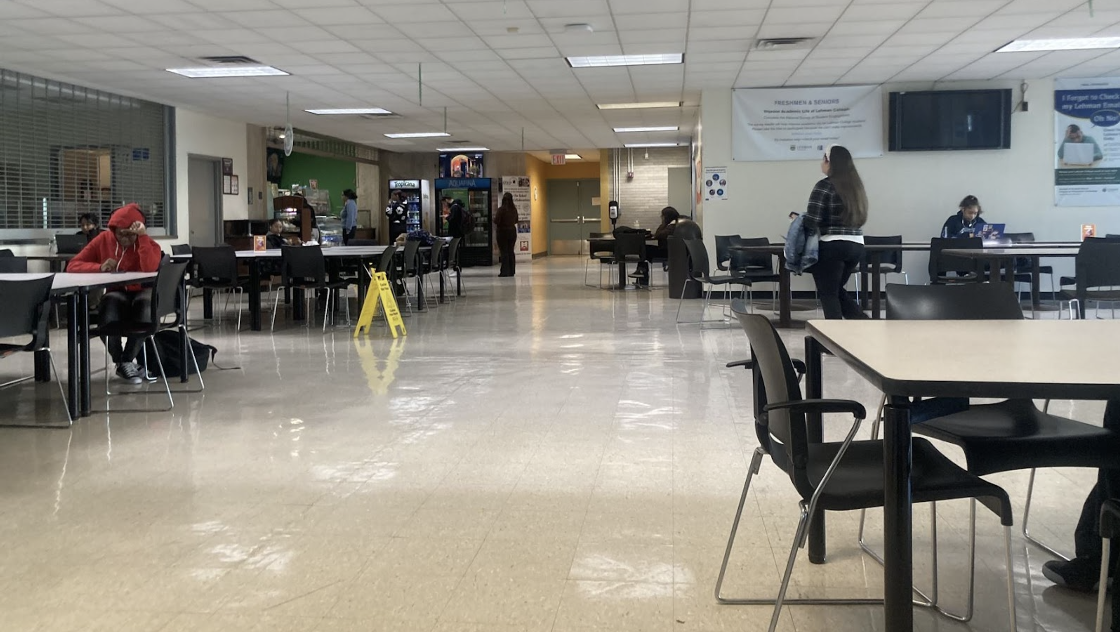
Change in taste: Lehman’s culinary experience post-pandemic
For many students at Lehman, grabbing a bite to eat between classes or catching up with friends over lunch is an essential part of the college experience. Whether it’s breakfast in the morning, lunch in the afternoon, or even a simple snack to get through the day, eating something while on campus has become essential to students.

By Brian CortesFor many students at Lehman, grabbing a bite to eat between classes or catching up with friends over lunch is an essential part of the college experience. Whether it’s breakfast in the morning, lunch in the afternoon, or even a simple snack to get through the day, eating something while on campus has become essential to students. Considering this, it is no surprise that students have paid close attention to Lehman's dining services. In the process of keeping up with the dining services, many questions from students have arisen over time. As Lehman students returned in the fall of 2021 during the transition period of reopening post-pandemic, they left the cafeteria services behind as it remained closed until the fall of 2022. Once it did, students quickly noticed their dining experience differed from the one they remembered. With different food options and items, they remember having a different presentation. Following this, students began raising questions about the changes. David Charcape, Assistant Director of Campus Life, reflected on the pre-pandemic dining scene, explaining, "Prior to the pandemic, the college used to have a vendor called Metropolitan. Not only did they run the main cafeteria in the basement of the Music Building, but they also offered catering services for campus events. Most of the clubs and offices used their services often, and the prices were very competitive.” Metropolitan Food Service Inc. was the food service provider that supplied the campus with most of its food options, and the experience most students were familiar with before the pandemic. Many students reflect on their experience when Metropolitan was around with comments like “I could always count on a slice of pizza to get me through the day” and “the burger and fries combo always hit the spot and left me and my friends satisfied.” Also, similar sentiments were shared about how the cafeteria services back then created a comfortable environment for them to eat or simply hang out before, in between, and after classes. Like many things in our time, Metropolitan Food Services Inc. was not able to stay open for business as Lehman and other colleges shut down campus activities. This served as a primary source of income for Metropolitan, and the absence made it hard for them to stay in business. This is true for most of the food providers of colleges in NYC. Despite this, Lehman needed to continue providing dining services as part of getting the services on campus back up and running. This led to a new supplier taking the reins of dining services at Lehman in the form of JG Restaurant Ventures LLC (DBA World Cup). JG has been in charge of the current food services at Lehman since the reopening of its cafeteria services. The change was apparent when students observed that their usual food items, like the pizza, looked and tasted different. To gauge if the overall experience provided by JG is better, worse, or the same as Metropolitan is harder to evaluate since comparing taste, portions, health benefits, and overall experience are different areas that could vary depending on who you ask. However, a comparison between both services presents itself in the form of the annual budgets of the Lehman Auxiliary Enterprise Corporation, which demonstrates the revenues that the cafeterias bring to Lehman annually.According to the files in the fiscal year of 2019-2020, when Metropolitan was still operating, the cafeteria generated around $126,837 compared to our current fiscal year 2024-2025, in which JG is running reports of around $60,000. At first glance, based on the numbers, it might appear that Metropolitan’s final year running provided more satisfaction by a long shot compared to JG, which hasn’t been able to gross half of Metropolitan's earnings. But it's important to remember that Lehman is still recuperating itself post-COVID and that JG is continuously reassessing and refining its services to better provide to students. Since Metropolitan had a longer time for trial and error, it had time to figure out what the best accommodations were when servicing Lehman. Further inspection of the Auxiliary Enterprise Corporation files also reveals that in the fiscal year of 2022-2023, the cafeteria generated $20,000, and in the fiscal year of 2023-2024, the cafeteria generated $45,000. Considering that this year generated around $60,000, it is evident there's an upward trajectory in performance from JG since their income has increased yearly. This trend indicates that students are slowly trusting JG more and more for their dining services. Something important to note is that JG has to compete with other food services that students have adopted when all the cafeteria services at Lehman were closed. This includes other local dining locations like cafes, food carts, and restaurants. Something that Metropolitan didn’t have to deal with as much. Once Lehman began providing dining services, students weren’t so quick to change back from the new food options they had made part of a routine. It’s natural for a business not to do so well at the start and to progress with further time to succeed continuously. Just because JG hasn’t immediately shown the same profit level as the Metropolitan once did, it doesn’t mean that it won’t ever equal or surpass it at some point.
Striking a Fulfilling Balance: Navigating College Life Successfully
Imagine juggling a dozen balls in the air—each labeled with a responsibility like classes, homework, friends, work, and self-care—all while trying to maintain balance on a tightrope. For most college students, this is their reality.

By Pamela DuranImagine juggling a dozen balls in the air—each labeled with a responsibility like classes, homework, friends, work, and self-care—all while trying to maintain balance on a tightrope. For most college students, this is their reality. The challenge of managing academic and personal life can feel overwhelming, a complex act requiring both careful time management and unwavering dedication.For many students, particularly those just starting their college journey or still struggling to find their footing, the balancing act can seem daunting. They are tasked with managing a wide array of commitments: attending classes, completing homework, meeting deadlines, participating in extracurriculars, working part-time jobs, and making time for friends and family. On top of all that, students must prioritize their physical and mental health, practice self-care, and maintain a consistent routine.However, don't worry. There are ways to tackle these challenges effectively. Let’s explore some strategies that can help you confidently navigate your college experience, leaving you satisfied with your results.First, as the semester progresses, students often face an ever-growing pile of homework and assignments. To manage time effectively, consider the following practical strategies: stay focused on your syllabus and professor's instructions. By staying aware of course requirements, you can gauge your workload early on and make informed decisions about dropping or switching classes if needed.Next, setting reminders for tasks can also be helpful. Use digital calendars or phone alerts to stay organized. Find the method that best helps you keep track of assignments, deadlines, and study sessions. The Pomodoro Technique is another useful approach—set a timer for 25 minutes and focus on one task. Afterward, take a short break, and after four "pomodoros," take a longer break. This method helps maintain focus and avoid burnout.In addition, time blocking can also be a valuable tool. Divide your day into dedicated time slots for specific tasks or subjects. For example, schedule 9-11 AM for math study and 1-3 PM for essay writing. This structured routine ensures balanced attention to all your academic needs. The key is to experiment with these techniques and find a combination that suits your personal study style and schedule.Many students struggle to find enough time for all their responsibilities, but rest assured, 24 hours is enough—you just need to use it wisely. If you don't complete all your tasks in a single day, remember there’s always tomorrow. Avoid procrastination, but also don’t be too hard on yourself. Be realistic about what you can accomplish in a day, prioritize urgent tasks, and spread everything else throughout the week. When it's time to tackle each task, focus solely on it. If you can complete something ahead of schedule, do so. This forward-thinking mindset will help you stay on top of your workload.Moreover, it's also important to regularly assess how you spend your time. Start by identifying activities that consume the most time and evaluate their importance. Ask yourself, "Am I striking a good balance between academics, social life, work, and extracurriculars?" If you are, take note of what’s working well. If not, consider what needs adjusting.Over the moon, for students not new to college life, reflecting on how your approach to time management has evolved can be insightful. What strategies have you developed over time? What lessons have you learned along the way? Continual self-assessment is key to finding and maintaining balance throughout your college career. Don’t hesitate to seek campus resources if you need help fine-tuning your time management skills.Additionally, it's important to recognize that college life, like any journey, has its challenging periods. Bad days, weeks, or even months are normal. When frustration builds, how you channel that energy can greatly impact your overall experience. Make time for mental health, even if it’s just five minutes a day. Self-care is essential, especially amid a busy schedule.Experienced students remind us that maintaining balance is an ongoing process. As you move through your college career, you may occasionally lose sight of how capable you are, particularly during stressful times. Always be open to adapting your approach as needed. Flexibility is a powerful tool when juggling the different aspects of college life.Setbacks are inevitable, but they are also opportunities for growth. By embracing challenges as learning experiences, you develop resilience and adaptability—traits that will serve you well beyond college. As you progress through your academic journey, continue reflecting on your experiences, remain open to new strategies, and utilize the support systems available on campus. This approach will help you cultivate a fulfilling college experience and prepare you for future challenges.On the whole, if you ever find yourself struggling, don’t hesitate to tap into Lehman College’s resources: the Wellness Center, located in the Old Gym Building, Room 007B; the Tutoring Center in Room 205; the CS Lab in Gillet Hall, Room 222; and the Career Exploration & Development Center in Shuster Hall, Room 254 (appointments required).Ultimately, successfully managing college life is about finding a balance that works for you. Remember, the goal is progress, not perfection. College is a journey of self-discovery, time management, and personal growth. By embracing a flexible mindset and being open to change, you can thrive both academically and personally.
Dealing with AI at Lehman: AI’s impact on the educational system
On November 30th, 2022, ChatGPT was released to the public, marking a significant milestone in the use of artificial intelligence. Since then, its rapid integration into both educational and professional environments has raised important questions about the role of AI in the future of learning.

By Brian CortesOn November 30th, 2022, ChatGPT was released to the public, marking a significant milestone in the use of artificial intelligence. Since then, its rapid integration into both educational and professional environments has raised important questions about the role of AI in the future of learning. At Lehman College, students and professors alike have experienced firsthand the effects of AI on their daily routines, shaping differing opinions on how it should be used and what its implications could be for students' career paths. One such student is Ertis Pashako, a Lehman undergraduate majoring in Film and TV Studies with a concentration in TV. As both a student and freelance content creator, Ertis has witnessed how AI tools have significantly transformed his academic experience as well as his creative endeavors. Reflecting on this change, he observes, “A lot of apps started coming out for photographers where you can fix photos. Just swipe to go to Photoshop and zoom in. You don't fix it. Now you just have a regular app that you download, and you just transfer your photo over, and basically swipe it, and it fixes everything for you. And then stuff like ChatGPT came out, so everybody in school started using it to write their papers.” Above, this shift in workflow, from hands-on creative efforts to AI-driven automation, has led Ertis to a broader reflection on the pros and cons of AI in education. On one hand, AI provides powerful tools that can streamline the creative process, helping content creators and editors enhance their work more efficiently. On the other hand, the ease of access to such tools can inadvertently encourage students to cut corners, altering their mindset toward the effort they put into their work. Ertis notes, "I thought of many things. First, this is gonna help editors—once programs or apps get good at it—where you can just upload all your footage, and it does the editing for you, kind of mimicking your style of editing. So, this is gonna be great for content creators. Then there's the negative side, where people use it to cheat, and it makes people lazy. They’re not doing their own work, their own research. They're just typing stuff and getting automated answers, then copying and pasting." In the sky, as AI continues to weave itself into both the academic and personal lives of students, questions arise about the role educational institutions should play in this evolving landscape. Ertis advocates for colleges to incorporate AI into the curriculum—not as a substitute for personal effort, but as a tool to complement students’ learning. He emphasizes that while AI is relatively new, its influence will only grow, and schools need to stay ahead by educating students on how to use AI responsibly. “Maybe incorporate a little AI into what we're learning, teach us more about it. It's something very new that even schools and professors haven't picked up. Two years ago, there were few things like ChatGPT. So it had a bad reputation coming in. People were cheating and basically writing their papers, and professors, they didn't know at the time,” Ertis comments. He envisions a future where students learn how to use AI as an aid to their projects, rather than letting AI take control of their creative processes. 
However, students are not the only ones grappling with the ethical and practical implications of AI. Professors, too, are reflecting on how AI is impacting the educational system. Professor Margot Mifflin, who teaches courses on beauty pageants, national identity, and the publishing industry at Lehman, has seen AI affect student writing in real time. She recalls noticing the use of AI-generated work as early as the fall of 2022, pointing out how it often manifested in disjointed and erratic sentence structures that were noticeably different from typical student writing. “I saw it in the fall of last year, and it's sort of easy to detect, or it was then, because it scrambles sentences, and so, you know, a student might be writing and, suddenly there's a lesson on another topic, there's no flow in a way that I've never seen in student writing,” she explains.For Mifflin, the issue extends beyond just catching AI-generated work; it’s about ensuring that students are developing their own writing skills. She highlights the importance of writing as a fundamental form of self-expression that is essential in both personal and professional contexts. “I think it's going to be harder for students who think they can rely on it. There's just so many parts of life where you have to be able to write, even if you're not an English major. Learning to write is learning to express yourself, and learning to express yourself is such an important part of our world in terms of connecting with other people and understanding them, and helping them understand us. So doing that yourself is pretty crucial for any person,” she adds. This concern is not just theoretical. Mifflin shares a personal anecdote in which her book, The Blue Tattoo, was used without her permission to train AI, raising ethical questions about the use of copyrighted work in AI training. "It was kind of jarring to discover that the text was used to feed the AI, and all the tropes and expressions and sentence structures were replicated so it could be reused and regurgitated when people want to compose something," she recounts. This raises broader concerns about the ethical use of AI, especially as more creative and academic content is fed into these systems, often without the original creators’ consent. In light of these developments, Mifflin advises students to resist the temptation to rely on AI for their academic work, urging them to reach out to professors for support if they feel uncertain about their skills. “I would say, try to resist the urge to use it. Because it's important for you to develop writing skills of your own. And if you feel the urge to use it because of pressure, like work pressure or insecurity about your writing skills, talk to your professor before you resort to using it. Find out how you can feel better about your own writing without using a crutch,” she advises. Ultimately, the debate surrounding AI in education is far from settled. As AI software becomes more advanced and harder to detect, schools will need to adapt continuously, finding ways to address the changing dynamics between students and AI. The discussion extends beyond just academic settings, as the same students who experiment with AI in school will likely encounter it in various professional fields, from literature and entertainment to STEM disciplines. Above all, the challenge for both students and educators will be to strike a balance between using AI as a helpful tool and maintaining the integrity of individual skills and creativity. As technology continues to evolve, the conversation surrounding AI will also need to expand, taking into account the long-term implications of its use. In the end, the key lies in learning how to use AI effectively—without letting it undermine the essential human effort and innovation that education is meant to foster. 
The Importance of Financial Literacy Among College Students
Learning about financial literacy early on sets students up for a successful future.

By Sarah ElabidLearning about financial literacy early on sets students up for a successful future. When it comes to practical financial skills, students should learn about budgeting, saving, understanding credit, and managing debt. These skills will help them make informed decisions, avoid financial pitfalls, and prepare for a successful financial future. College students often make a few common financial mistakes. When it comes to financial pitfalls, students can sometimes fall into the trap of overspending on unnecessary things, not budgeting, misusing their credit cards, and not saving enough. Additionally, many college students aren’t informed on terms like, interest rates, and repayment options when it comes to paying for their college tuition. “While being at Lehman, I had a lot of friends who were going into debt while applying for their student loans process or overspending with credit cards. They did not know how to manage their expenses.” An economics major, Juan Santos mentioned in an interview with the Meridian. Given that college is a significant financial investment, students must become knowledgeable about selecting loans that will not negatively impact their credit score. This can be achieved by learning about interest rates and repayment alternatives. According to polls conducted by NEFE and AmeriSpeak, “80% said they wish they were required to take a semester or year-long financial education course during high school.” Financial literacy not being taught in schools is a missed opportunity. Because of this, in recent years there has been a push to include this knowledge in the high school curriculum.This article from The Hill states that financial literacy courses will soon be offered for kindergarten through twelfth grade in 25 states. While the programs are still being implemented in 17 of those states, eight are already offering them. “85% of U.S. high school students say that they are interested in learning about financial topics in school, and 95% of students who currently receive financial curriculum find it helpful,” according to the Intuit Financial Education survey.In addition to how to manage finances responsibly and understanding student loans, tax literacy is a crucial life skill that will be useful for students to acquire while in school and throughout their lifetimes. Learning about taxes can go on to help students understand how that system works and can help students navigate their financial responsibilities as they start earning more income. A great place to start learning about finances is by reading books or articles on personal finance. There are also online resources and Lehman courses available, such as BBA 204 and BBA 207 that cover topics like budgeting, saving, investing, and much more. Additionally, you can reach out to financial institutions or organizations that offer financial literacy programs for students. “There is nobody in the finance field who is an expert in everything. Everyone I know in this field is constantly learning and educating themselves. It is important to keep learning either through courses here at Lehman, other sources of information online, books, or webinars to upskill your knowledge.” says Assistant Professor Dr. Stein Smith. For those who are not accounting or economics majors, the Financial Learning Group is a fantastic way for students to grow their financial knowledge here at Lehman College. The Financial Learning Group was established by Lehman College students to encourage and educate their peers to manage and build their wealth responsibly. This club meets weekly on Wednesdays in the Bloomberg Lab of the Leonard Lief Library, from 4 PM to 5 PM. Racielly Mella, a biology major states, “As a chemistry major, FLG has allowed me to have access to information that I would otherwise have to pay for or just not have enough time for. I consider the club a haven for learning just about anything that has to do with finance. The club is a true gem and I feel like there truly is a place for everyone there.”The club covers a wide range of subjects, including investing, tax planning, wise budgeting, mastering credit card rewards programs and debt management. They also have offered students an introduction to cryptocurrencies and bitcoin investing, and are always accessible to help with any financial queries you may have.
Exploring the Dangers of Excessive Screen Time
Do you feel a spike of anxiety when your phone goes missing, even for just a moment?

By Daniel DouglasDo you feel a spike of anxiety when your phone goes missing, even for just a moment? Have you skipped social gatherings to indulge in screen time at home? Or worse, have you ever narrowly avoided a collision because your eyes were glued to your phone screen?If you answered yes to any of these questions, you might be part of the growing phenomenon known as the "Smartphone zombie" tribe. These individuals, ensnared by the allure of constant connectivity, find themselves increasingly disconnected from the world around them. And the consequences are more than just personal—they're societal and potentially dangerous.In today's digital era, the line between reality and technology blurs as smartphones become predominant. This technological revolution has birthed a new breed of individuals known as "Smartphone Zombies," fixated on their screens to the detriment of everything else. In Hong Kong, they're dubbed dai tau juk, or "the head-down tribe." Despite the negative implications, many remain unaware of the consequences of smartphone addiction. Excessive smartphone use disrupts sleep patterns, as the blue light emitted by screens hinders melatonin production, leading to sleep deprivation and decreased REM (rapid eye movement) sleep. According to the National Sleep Foundation, 90% of adults admit to using electronic devices within an hour before bedtime, disrupting sleep patterns. Moreover, constant notifications disturb deep sleep, perpetuating this cycle.This addiction also impairs concentration, with studies showing smartphones alter brain activity, hindering focus on tasks. A study published in the Journal of Experimental Psychology found that even the mere presence of a smartphone reduces cognitive capacity. Furthermore, reliance on smartphones has eroded basic skills, diminishing memory, and physical well-being. Neck, shoulder, and thumb discomfort are common, worsened by prolonged usage. Over the moon, poor posture from excessive screen time can lead to spinal injuries and even respiratory issues. A study conducted by the National Library of Medicine found that prolonged smartphone usage is associated with forward neck posture, slouched posture, and rounded shoulders, leading to structural issues and respiratory function impairment.Besides, children aren't spared from the impacts, with excessive screen time leading to learning gaps and reduced verbal intelligence. According to a study by the American Academy of Pediatrics, children aged 8 to 18 spend an average of 7 hours and 38 minutes per day using entertainment media, including TV, computers, video games, and smartphones. This overexposure to screens has been linked to lower academic performance and verbal intelligence.Despite these concerns, there's hope in managing screen time consciously and seeking support for accountability. Identifying triggers for excessive use and distancing phones from bedtime can help break free from smartphone addiction and its detrimental effects. It's time to revive ourselves from this zombie-like existence before it's too late. Take the bold step of distancing your phone from your bedside, even if it poses a challenge - the rewards far outweigh the effort. Consider the repercussions of altering your lung function due to poor posture - isn't that reason enough to break free from our zombie-like existence?Having Trouble Picking a Major? Lehman is Here to Help
Many college students often experience nervousness about career options or uncertainty about their dedication toward a major.

By Sarah ElabidMany college students often experience nervousness about career options or uncertainty about their dedication toward a major. At Lehman College, students are offered the chance to explore a variety of pathways. Students should take their time, seek help, and self-reflect when making important decisions. There are multiple reasons why college students may need help to decide on a particular field of study. Some may experiment with various subjects to discover their real passion, while others might find it difficult to narrow their interests to just one.
It is common for students, whether they are first-year students or have already taken some college classes, to experience uncertainty. According to the University of South Florida, “an estimated 20-50 percent of students enter college undecided, and up to 75 percent report having changed their major at least once.”
As stated by Herzing University, students should consider their values, interests, and abilities while selecting a major. What skills come naturally? What pursuits provide a sense of fulfillment? When planning out their career route, students must research the undergraduate degrees offered by Lehman. Lehman offers more than 80+ undergraduate majors that students can explore while choosing potential majors that may resonate with them.
“When I first came to this school, I had absolutely no idea what I wanted to pursue. I came here not believing in myself, I thought I was not good at anything. However, that is when I had my first film class, which was a real revelation for me.” shares Xandar Reyes, a film studies major.
Moreover, Lehman offers students the opportunity to consult with experienced academic advisors who can assist them in making informed decisions when faced with uncertainty. It is recommended that students seek advice from academic advisers, professors, and professionals.
“Even when things got difficult and I was treading on uncomfortable paths, I still looked forward to working some more. It is an interesting feeling. Not only that, but the people I got to work with were amazing, super talented, and supportive. They twisted my arm and made me fall in love with the art.” says Reyes. Academic advising is available to students on campus in many ways. The most common way students can access these unique services is through Lehman Navigation. This application enables students to arrange virtual sessions with advisers. Lehman’s academic advising can also avail in-person consultation at room 280 of Shuster Hall. Advisors are experts in helping students understand the requirements of various degrees and career pathways. This guidance aids students in discovering a major that reflects their goals. Advisors can also offer valuable information about extracurricular activities and internships that help advance their careers.
Media Communications Studies Professor Ian Sheinheit shared a story regarding his experience discovering his passion for teaching in college. “During my undergraduate career, I developed an interest in thinking about how social phenomena impact politics, culture, and individuals. I had some fantastic professors and advisors who guided me toward thinking critically about this impact. I began thinking about the career-oriented question of my skills and assets and how I can use those to engage this passion.”
Lehman College provides many resources for students to establish relationships with other goal-oriented students that could help them in their career growth. For example, joining a club on campus. Juan Santos, an economics major, describes how starting the Lehman Financial Learning Club has enhanced his student and professional experiences. He began his professional career by aiding other students in their growth through the Financial Learning Group. “At first, I wanted to be an architect, then a Lawyer, and then I found economics. I knew I wanted to learn more about building wealth, which is one of the reasons why I started my club. I wanted to be able to share my knowledge of financial services and help students learn about wealth management.,” states Santos.
Being flexible allows students the freedom to try new things and have an open-minded approach that can bring forth opportunities. Professor Sheinheit encourages students to step out of their comfort zones, gain self-confidence, and expand their horizons.
“To think about what they are passionate about and try to answer the question, ‘How can I overlap my major choice with some qualities of that passion?’ Be flexible and do not ossify your path,” states Professor Sheinheit.Students should treat themselves with self-kindness and understanding. They can do this by setting realistic goals, engaging in activities that bring them joy, and celebrating progress no matter how small it may seem. It is important to remember that they are not alone, and should never hesitate to ask for assistance or guidance. Lehman College always provides support through its academic advising services, which are accessible in person on weekdays from 9 AM to 5 PM.