By Savon Williams
On April 17, Lehman’s Excellence in Education and Community Conference showcased human-centric educational practices such as hands-on, experimental learning and a design thinking model. Sponsored by the Center for Teaching and Learning, the event empowered students to access their multilingual abilities and personal histories and trained educators to ensure that empathy is at the front of their work with students.
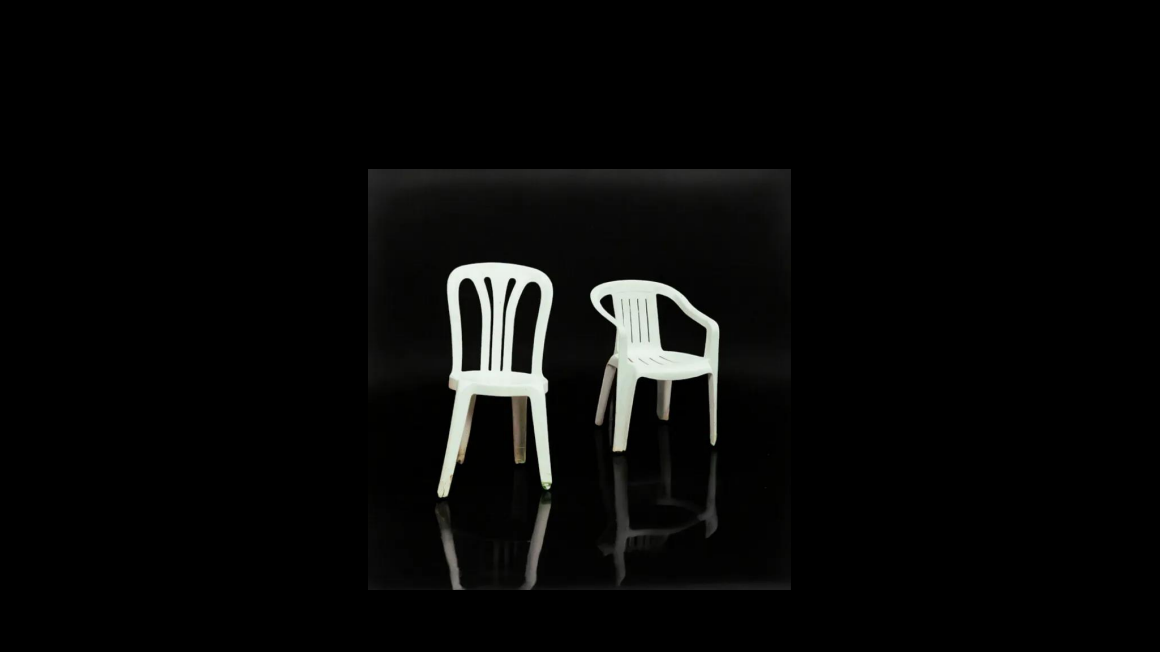
Magdelena Sagardia-Jimenez, a lecturer in Latin American & Latino Studies, focused on the importance of cultural identity, which, to her, is important as a human identity. “A Puerto Rico without Puerto Ricans [is like] a quesito without cheese,” she argued. To illustrate her argument, she analyzed the historical context of Bad Bunny’s “Debí Tirar Más Fotos” album, where one photo showed the “mono bloc” plastic chair, a mass-produced, plastic-molded chair that makes space for a larger community of family to participate in gatherings. This, she said, is a perfect example of an artifact, an object manipulated by humans that creates a deep emotional connection between its users.
“My idea is to share with my students certain objects and encourage them to write about their own culture and own experiences,” said Sagardia-Jimenez. This activity encouraged students to use knowledge in both reading and art history to analyze objects. Students pored over a single object to find all possible meanings in it, as the student becomes a scholar of their own past. She also invited the audience to participate in an exercise where she passed around items from her own cultural identity, including Puerto Rican-branded dominoes and dolls from her childhood. She then asked participants to write a post on a gallery-style website about the ideas the object inspired them.
“If you’re only looking at what multilingual students can do in English, you’re not looking at everything they can do.” - Martha Rosas, Assistant Professor in Early Childhood & Childhood Education
Another presenter, Martha Rosas, an assistant professor in Early Childhood & Childhood Education, focused on translanguaging: when an individual communicates by using all known languages without limitation. “If you’re only looking at what multilingual students can do in English, you’re not looking at everything they can do,” said Rosas. In translanguaging, by intentionally changing the languages a student uses, they are given an opportunity to strengthen all known language skills. Instead of only having “kitchen Spanish,” said Rosas, while putting all energy into learning English, bringing attention to this method allows a student to gain “academic Spanish” by empowering biliteracy skills.
Richard Finger, the vice president for Enrollment Management and an adjunct lecturer, and Andrew Gold, a clinical professor in Management and Business Innovation, shared their work on design thinking, which they defined as a method of academic advisement and empathetic student
problem-solving by brainstorming as many possible solutions within a short two-minute period. “One of the problems we face in higher education is people tend to stay in their jobs for a long time…, [so] they automatically fall into this mindset of ‘this is how we’ve always done it, we’ve tried that already and it’s failed, and no I don’t want to revisit it again,’” said Finger. To illustrate this, he asked participants to perform a task associated with the Design Thinking Process in groups.
Participants had to identify a person’s goals and problems. Then, by selecting a single problem from that person, participants had to brainstorm a list, as long as possible, within a two-minute period, filled with any solutions to the selected problems. Finally, participants created a musical jingle for their solution to their selected problem. In a real-world use of design thinking, the process would repeat if the solution proved ineffective after feedback. “I learned a very important lesson: to never build something… without first finding out if there’s a need for it or desire for it,” said Gold.