History, Justice and the Next Generation: A Black History Month Call to Action
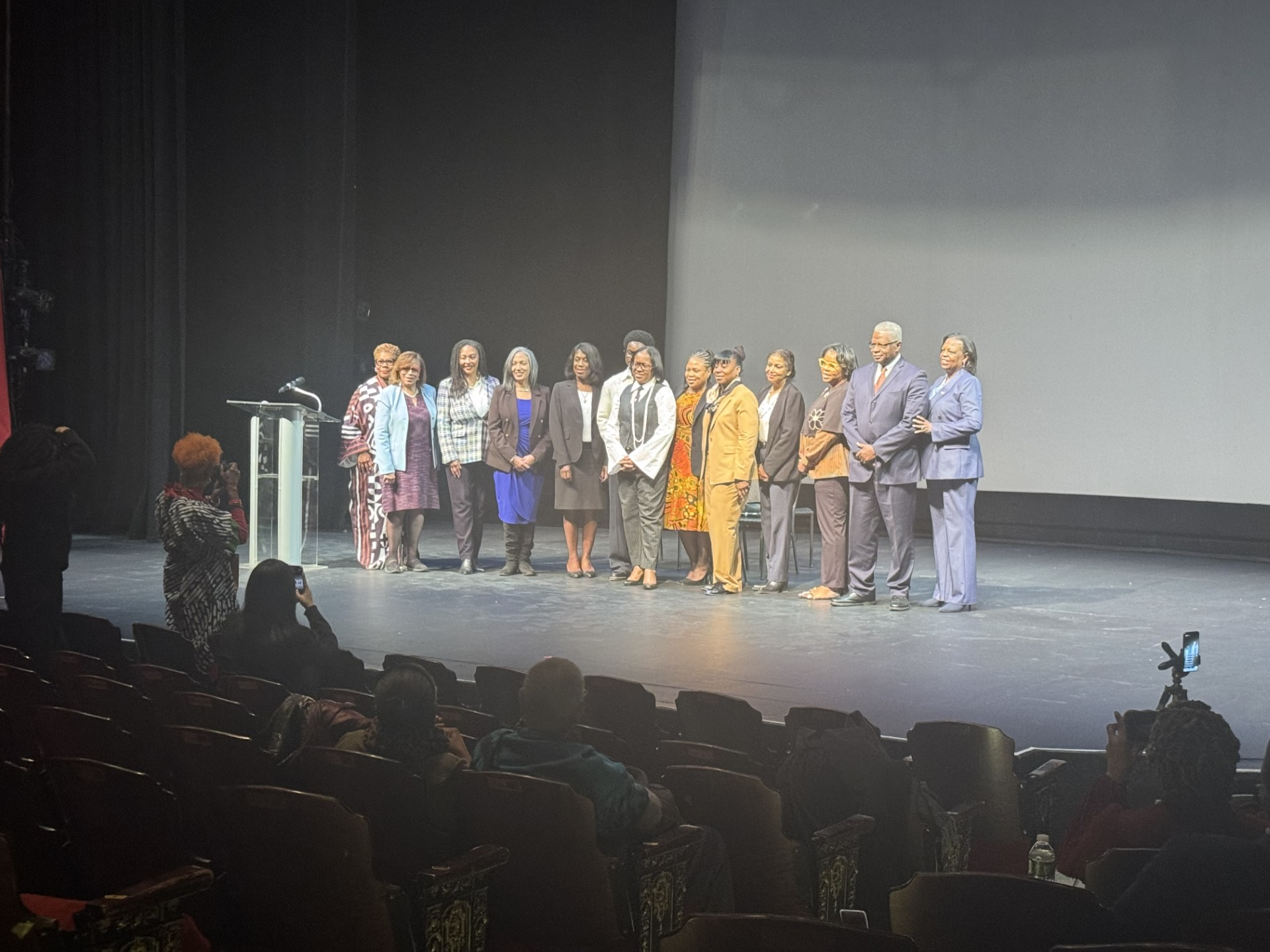
Photo By Amadou Kane
By Amadou Kane
On Feb. 19, Urban Male Leadership students from Lehman College attended a Black History Month program at Queens Theatre in partnership with the Macon B. Allen Black Bar Association to examine the legacy of Black legal advocacy and its influence on the future of justice.The event was organized around the theme that the struggles and achievements of Black Americans in the past have shaped the present, and the actions taken today will shape the next generation. Organizers said the program was especially important during Black History Month because it encouraged students to see history not as distant events, but as a living foundation for their own ambitions. By connecting Urban Male Leadership students with Black judges and attorneys, the gathering aimed to inspire young people to believe they can make a difference in the courts and in the legal profession while continuing the work of those who came before them.
The program comes as conversations about racial equity, access to justice and representation in law continue nationwide. Black Americans remain underrepresented in the legal field, and speakers
emphasized that visibility and mentorship are essential for building confidence and opportunity among students of color. The partnership between Lehman College and the Macon B. Allen Black Bar Association highlighted how education and community leadership can
work together to address long-standing barriers.
“Today, more than ever, it is so important that we continue to come together, engage in collective sharing of information and coordinate efforts to help move this country toward a more civil and just union,” said Jawan Finley, president of the organization that helped coordinate the event. Finley said this year’s Black History Month focus was on a century of Black excellence. The event featured visual displays to highlight how history connects to lived experiences.
Finley said, in reference to a quilt that was displayed, “The people that
you see on that quilt, one of them was my grandfather. He fought
in World War II.” She explained that her grandfather served during a
time when segregation still existed in the military, demonstrating how
Black Americans defended democracy abroad while facing discrimination at home.
Justice Janice A. Taylor placed the event in a historical context, emphasizing the deep roots of Black legal leadership in Queens. “All Black history in this country is American history,” Taylor said. She traced the origins of Black History Month to historian Carter G. Woodson in 1926. Additionally, Taylor described how early Black attorneys worked through the NAACP to fight for school integration, community employment and educational access.
“These attorneys worked to get jobs in African American neighborhoods, prevented the expansion of the Clearview Expressway through Black communities and fought to change the
original location of your college from College Point to Jamaica,” Taylor
said. She added that the Macon B. Allen Black Bar Association, founded in 1971, became a central force in advancing civil rights and professional opportunity for Black lawyers in Queens.
Honorable Cassandra A. Johnson focused on the importance of trust in the legal system, particularly for families navigating loss through Surrogate’s Court, saying, “The court is not merely validating a document. It’s protecting the decedent’s expressed intent.” She noted that historical discrimination has shaped how many Black families experience courts. “For some families, walking into a courtroom is not a neutral act. It’s shaped by memory,” she said.
John Jay College senior Rugens Jean Baptiste said seeing Black judges
and attorneys changed how he imagines his own future. “There was a time in this country where Black lawyers were not allowed to go into certain courts,” Baptiste said. “Representation is not abstract. It changes what you believe is possible.”
Baptiste described his recent internship in Queens Supreme Court
and the impact of watching a Black woman judge lead a courtroom, saying, “Justice does not happen by accident. It requires discipline, clarity and courage.”
Organizers said the event demonstrated how Black History Month can
serve as both reflection and motivation. By showing how past struggles shaped the present, the program aimed to empower a new generation of leaders to pursue careers in law and public service with purpose and confidence.