Syrian Documentary Shows What ‘Disappeared’ Means
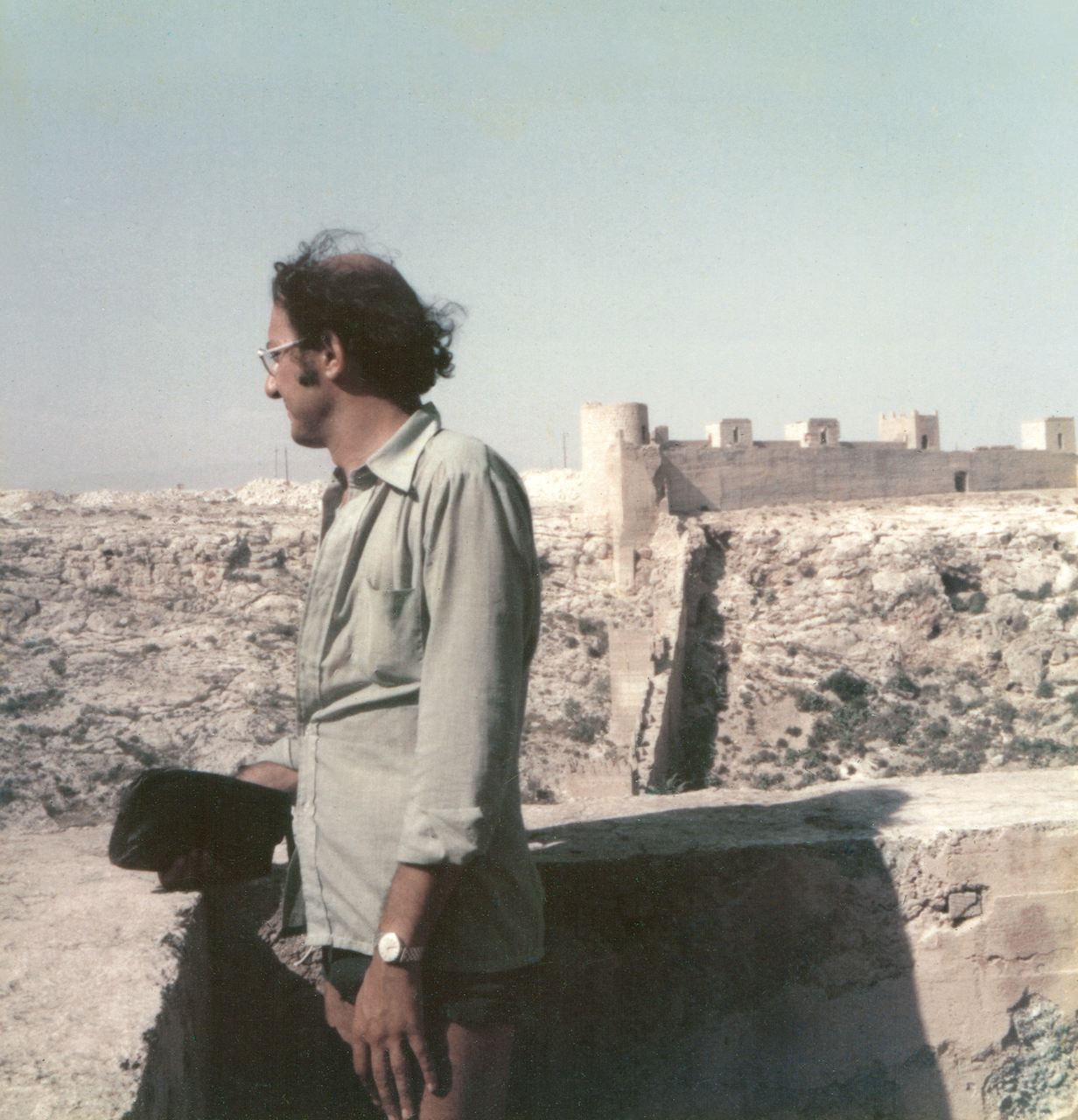
Still from Portrait of Michel by Christine Gedeon
by Daniella BilliniOn Dec. 8, the first anniversary of the fall of the Assad regime in Syria, the departments of Journalism and Media Studies and English screened A Portrait of Michel, a riveting and eyeopening film that allows the audience to experience a glimpse of what took place under that regime, followed by a Q&A with the director. The 44-minute documentary unfolds the life of Dr. Michel Saadé, who was forcibly disappeared in 1978 by security forces of the Assad regime, and the investigation of the documents he left behind in France, Lebanon, and Syria, pursued by his niece, the Syrian-American director of the film, Christine Gedeon.By centering Michel’s personal life and the hole his disappearance made in his extended family, the fi lm sketches lightly but clearly the cruelty of the Assad regime, which ruled Syria for more than 50 years and was known for forced disappearances, torture, strict surveillance, and many more horrors. In early 2011, Syrians took inspiration from protests across the region known as the Arab Spring, and started their own mass protests against Bashar alAssad, the son of Hafez alAssad, who ruled from 1971 to 2000. These demonstrations were met with the mass killing and arrest of protesters, which fueled the uprising and became the Syrian civil war. After the regime fell on Dec. 8, 2024, the Human Rights Foundation estimated that more than 150,000 people were forcibly disappeared, and another 306,887 civilians were killed between 2011 and 2021.
Watching the film, I was deeply moved by the level of craftsmanship and thought that went into telling such a story as this. Mostly in black and white, except for some older footage that came from an 8mm family fi lm, the documentary does not follow a linear timeline of events. Rather, it deploys a poetic mode that feels more like a montage of photos chronicling the life of Michel. Along with the mainly black-and-white footage, the sound design was also stark. Unlike conventional films, there was no music.
Gedeon, the director, stated that it purposely did not include music because adding music along with the interviews and text in the film “would feel so forced.” Its use of silences between the texts of the interviews makes the viewer slow down and take the time to process what was really going on. “I wanted people to reflect,” she explained, “and look at that object, and that piece of paper.”“Christine Gedeon committed to doing the brave work to help find closure for her and her family.” — Kris Aponte, Lehman sophomore in Education
Kris Aponte, a Lehman sophomore in Education, said, “The silence signified moments of despair, as well as acceptance for a family that may never have answers. Christine Gedeon committed to doing the brave work to help find closure for her and her family, and did so graciously.” Another student who attended the screening, Christopher Crum, said, “It was emotional, creative, and really grabs its viewers' attention.”“I am highly delighted that the Lehman faculty was able to show this documentary as many times films like these are shown for the first time internationally,” said James Mahon, the dean of Lehman’s School of Arts and Humanities. “The black and white of the film is very reminiscent of old Hollywood movies.”Gedeon added that the fall of the regime had made it possible for her to show the fi lm inside Syria, which would have been unthinkable over a year ago. “I actually showed this fi lm in Aleppo, and many people told me that they know someone who has been disappeared.” The story of Dr. Michel Saadé is only one of many stories that have been told, but there are many others that haven’t.